Greenvale Energy (GRV:AU) has announced High-Grade Uranium from drilling at Oasis
Download the PDF here.
This post appeared first on investingnews.com



Greenvale Energy (GRV:AU) has announced High-Grade Uranium from drilling at Oasis
Download the PDF here.

Families who lost loved ones in two crashes of Boeing 737 Max jetliners may get their last chance to demand the company face criminal prosecution Wednesday. That’s when a federal judge in Texas is set to hear arguments on a U.S. government motion to dismiss a felony charge against Boeing.
U.S. prosecutors charged Boeing with conspiracy to commit fraud in connection with the crashes that killed 346 people off the coast of Indonesia and in Ethiopia. Federal prosecutors alleged Boeing deceived government regulators about a flight-control system that was later implicated in the fatal flights, which took place less than five months apart in 2018 and 2019.
Boeing decided to plead guilty instead of going to trial, but U.S. District Chief Judge Reed O’Connor rejected the aircraft maker’s plea agreement in December. O’Connor, who also will consider whether to let prosecutors dismiss the conspiracy charge, objected to diversity, equity and inclusion policies potentially influencing the selection of an independent monitor to oversee the company’s promised reforms.
Lawyers representing relatives of some of the passengers who died cheered O’Connor’s decision, hoping it would further their goal of seeing former Boeing executives prosecuted during a public trial and more severe financial punishment for the company. Instead, the delay worked to Boeing’s favor.
The judge’s refusal to accept the agreement meant the company was free to challenge the Justice Department’s rationale for charging Boeing as a corporation. It also meant prosecutors would have to secure a new deal for a guilty plea.
The government and Boeing spent six months renegotiating their plea deal. During that time, President Donald Trump returned to office and ordered an end to the diversity initiatives that gave O’Connor pause.
By the time the Justice Department’s criminal fraud section briefed the judge in late May, the charge and the plea were off the table. A non-prosecution agreement the two sides struck said the government would dismiss the charge in exchange for Boeing paying or investing another $1.1 billion in fines, compensation for the crash victims’ families, and internal safety and quality measures.
The Justice Department said it offered Boeing those terms in light of “significant changes” Boeing made to its quality control and anti-fraud programs since entering into the July 2024 plea deal.
The department also said it thought that persuading a jury to punish the company with a criminal conviction would be risky, while the revised agreement ensures “meaningful accountability, delivers substantial and immediate public benefits, and brings finality to a difficult and complex case whose outcome would otherwise be uncertain.”
Judge O’Connor has invited some of the families to address the court on Wednesday. One of the people who plans to speak is Catherine Berthet, whose daughter, Camille Geoffrey, died at age 28 when a 737 Max crashed shortly after takeoff from Ethiopia’s Addis Ababa Bole International Airport.
Berthet, who lives in France, is part of a group of about 30 families who want the judge to deny the government’s request and to appoint a special prosecutor to take over the case.
“While it is no surprise that Boeing is trying to buy everyone off, the fact that the DOJ, which had a guilty plea in its hands last year, has now decided not to prosecute Boeing regardless of the judge’s decision is a denial of justice, a total disregard for the victims and, above all, a disregard for the judge,” she said in a statement.
Justice Department lawyers maintain the families of 110 crash victims either support a pre-trial resolution or do not oppose the non-prosecution agreement. The department’s lawyers also dispute whether O’Connor has authority to deny the motion without finding prosecutors acted in bad faith instead of the public interest.
While federal judges typically defer to the discretion of prosecutors in such situations, court approval is not automatic.
In the Boeing case, the Justice Department has asked to preserve the option of refiling the conspiracy charge if the company does not hold up its end of the deal over the next two years.
Boeing reached a settlement in 2021 that protected it from criminal prosecution, but the Justice Department determined last year that the company had violated the agreement and revived the charge.
The case revolves around a new software system Boeing developed for the Max. In the 2018 and 2019 crashes, the software pitched the nose of the plane down repeatedly based on faulty readings from a single sensor, and pilots flying then-new planes for Lion Air and Ethiopian Airlines were unable to regain control.
The Transportation Department’s inspector general found that Boeing did not inform key Federal Aviation Administration personnel about changes it made to the MCAS software before regulators set pilot training requirements for the Max and certified the airliner for flight.
Acting on the incomplete information, the FAA approved minimal, computer-based training for Boeing 737 pilots, avoiding the need for flight simulators that would have made it more expensive for airlines to adopt the latest version of the jetliner.
Airlines began flying the Max in 2017. After the Ethiopia crash, the planes were grounded worldwide for 20 months while the company redesigned the software.
In the final weeks of Trump’s first term, the Justice Department charged Boeing with conspiring to defraud the U.S. government but agreed to defer prosecution and drop the charge after three years if the company paid a $2.5 billion settlement and strengthened its ethics and legal compliance programs.
The 2021 settlement agreement was on the verge of expiring when a panel covering an unused emergency exit blew off a 737 Max during an Alaska Airlines flight over Oregon at the beginning of last year. No one was seriously injured, but the potential disaster put Boeing’s safety record under renewed scrutiny.
A former Boeing test pilot remains the only individual charged with a crime in connection with the crashes. In March 2022, a federal jury acquitted him of misleading the FAA about the amount of training pilots would need to fly the Max.

Amazon is eliminating a program that allows members of its Prime subscription program to share free shipping benefits with people outside their household.
The company began notifying users in recent days that it plans to end the Prime Invitee Program on Oct. 1, according to a notice viewed by CNBC.
“We are writing to inform you that the Prime Invitee Program, which allowed sharing Prime’s fast, free delivery with others, will end on October 1, 2025,” the notice states. “Your invited guests will be notified directly about this change by September 5, 2025.”
Amazon previously let Prime members share free, two-day shipping with one other adult in their household, even if they used a different address.
Starting next month, the company will require invitees who don’t live with the account holder to sign up for their own Prime membership.
It’s phasing out the program in favor of Amazon Family, which lets Prime members share free shipping and other benefits with one other adult, four children and up to four teens added before April 7, 2025.
All users must share the same primary residential address, or the “address you consider to be your home and where you spend the majority of your time,” Amazon said.
The change comes as Reuters reported Monday that Amazon’s Prime signups in the U.S. fell short of last year’s total and its own targets, citing internal company documents. Amazon told the outlet that Prime membership continues to grow in the U.S. and internationally.

The Walt Disney Company will pay $10 million to settle Federal Trade Commission allegations that it enabled the unlawful collection of children’s personal data on YouTube.
The FTC claimed the company allowed data to be collected from kids who viewed videos directed at children on YouTube without notifying parents or obtaining their consent.
The complaint alleged that Disney violated the Children’s Online Privacy Protection Rule by not labeling some YouTube videos as being made for children. The agency claimed the company was able to collect data from viewers of child-directed content who were under the age of 13 and use it for targeted advertising.
In 2019, after a settlement with the FTC, YouTube began requiring content creators to list whether uploaded videos were “made for kids” or “not made for kids.” The designation ensures that personal information is not collected from the “made for kids” videos and personalized ads will not be served to viewers. Comments are also disabled on those videos.
The proposed settlement would require Disney to pay a $10 million civil penalty, comply with the children’s data protection rule and implement a program to review whether videos posted to YouTube should be designated as “made for kids.”
“Supporting the well-being and safety of kids and families is at the heart of what we do,” the company said in a statement obtained by CNBC. “This settlement does not involve Disney owned and operated digital platforms but rather is limited to the distribution of some of our content on YouTube’s platform. Disney has a long tradition of embracing the highest standards of compliance with children’s privacy laws, and we remain committed to investing in the tools needed to continue being a leader in this space.”
Axios was the first to report the settlement.

U.S. President Donald Trump on Tuesday accused Russian President Vladimir Putin, Chinese President Xi Jinping and North Korean leader Kim Jong Un of conspiring against the U.S. after the three world leaders met in Beijing during a military parade.
‘The big question to be answered is whether or not President Xi of China will mention the massive amount of support and ‘blood’ that The United States of America gave to China in order to help it to secure its FREEDOM from a very unfriendly foreign invader,’ Trump wrote on Truth Social.
‘Many Americans died in China’s quest for Victory and Glory,’ he continued. ‘I hope that they are rightfully Honored and Remembered for their Bravery and Sacrifice! May President Xi and the wonderful people of China have a great and lasting day of celebration. Please give my warmest regards to Vladimir Putin, and Kim Jong Un, as you conspire against The United States of America.’
The parade attended by the three U.S. adversaries commemorated the 80th anniversary of Japan’s surrender in World War II, highlighting Beijing’s efforts to showcase military power and deepen alliances at a time of heightened global tensions.
Kim’s attendance at the parade was his first trip to Beijing since 2019, as Pyongyang seeks to bolster ties with both China and Russia.
The military parade in Beijing featured thousands of troops marching through Tiananmen Square in a 70-minute display showcasing China’s latest weaponry.
Meeting ahead of the event in Beijing, Putin championed the ‘unprecedentedly high’ ties between himself and Xi amid the Russia-Ukraine war that began with a Moscow invasion in February 2022.
The meeting reaffirmed the increased unity the two countries have pursued following Putin’s invasion of Ukraine.
Fox News’ Caitlin McFall and Emma Bussey contributed to this report.
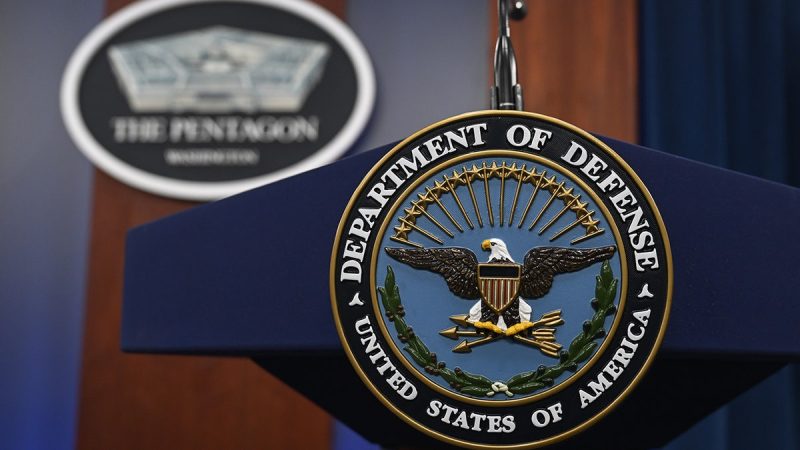
The Senate teed up a colossal package to authorize funding for the Pentagon on Tuesday, marking the first legislation to hit the floor since lawmakers returned from August recess.
Lawmakers advanced the Fiscal Year 2026 National Defense Authorization Act (NDAA) on a largely bipartisan 84 to 14 vote, setting up the bill for debate before a later vote to advance it from the Senate.
This year’s version of the bill isn’t as divisive as its predecessor, given the lack of provisions targeting ‘woke’ policies at the Pentagon, which became a major target for Republicans when they gained power in the House during the latter half of former President Joe Biden’s first term.
Instead, the measure focuses on military contracting reforms and lasers in on the Pentagon’s failure to complete, let alone pass, an audit for the last several years. It also includes a bump to service members’ pay, though not as high as in recent years. It also includes an extension to the Ukraine Security Assistance Initiative through 2028, and increases authorized funding to $500 million.
Still, the measure would authorize about 3% more funding for the Pentagon when compared to last year’s NDAA in the midst of the GOP and White House’s push to cut costs in the government.
It also comes on the heels of a $150 billion injection of defense spending passed in President Donald Trump’s ‘big, beautiful bill.’
Senate Armed Services Committee Chair Roger Wicker, R-Miss., said after the bill glided through committee in July that the ‘United States is operating in the most dangerous threat environment we have faced since World War II.’
‘The bill my committee advanced today is a direct reflection of the severity of that threat environment, as well as the rapidly evolving landscape of war,’ he said. ‘My colleagues and I have prioritized reindustrialization and the structural rebuilding of the arsenal of democracy.’
And Sen. Jack Reed, the Democrat on the panel, similarly agreed that the U.S. ‘faces a global security environment unlike any in recent memory.’
‘This legislation invests in the service members, technology, and capabilities we need to deter our adversaries and defend our national interests,’ the Rhode Island Democrat said. ‘I thank Chairman Wicker and our colleagues on both sides of the aisle for advancing this bill to prioritize the safety and security of the American people.’
The Senate and House have offered competing versions of the bill, too. Lawmakers in the upper chamber leapfrogged their colleagues in the House, where their iteration of the NDAA is expected to be considered next week.
Overall, the Senate’s version of the legislation would tee up nearly $925 billion in defense spending. That total is split among the Department of Defense at over $878 billion, the Department of Energy at over $35 billion with another $10 billion allocated for ‘defense-related activities’ outside of the bill’s jurisdiction.
The House version of the bill clocked in at just over $848 billion, well below the Senate’s product but more in line with the Pentagon’s budget request for the upcoming fiscal year.

The House Oversight Committee released a tranche of thousands of documents related to Jeffrey Epstein’s case on Tuesday night.
The surprise file dump came ahead of an expected House-wide vote to formalize the committee’s Epstein inquiry on Wednesday afternoon.
That vote, while largely symbolic, would also direct the House Oversight Committee to release the Epstein files sent by the Department of Justice (DOJ).
Nearly 34,000 pages are being released that include the DOJ’s interview with Ghislaine Maxwell and videos that appear to show the inside of Epstein’s Palm Beach home.
House Oversight Committee Chairman James Comer, R-Ky., subpoenaed the DOJ in early August for all documents pertaining to its investigation of Epstein and Maxwell.
The subpoena was directed by a bipartisan vote during an unrelated House Oversight Committee hearing in late July.
‘This is the most thorough investigation into Epstein and Maxwell to date, and we are getting results,’ Comer said during a House Rules Committee meeting on Tuesday evening.
‘We have already deposed former Attorney General Bill Barr, the Department of Justice provided nearly 34,000 pages of documents and will produce more, which are being made public as we speak.’
Rep. Robert Garcia, D-Calif., the top Democrat on the committee, claimed that some 97% of those documents were already public, however.
The sudden release appears to be a bid to neutralize an effort by Reps. Thomas Massie, R-Ky., and Ro Khanna, D-Calif., to force a vote on their own bill to make the DOJ release information on Epstein.
The bipartisan pair is spearheading what’s known as a discharge petition — a rare procedural move that allows lawmakers to circumvent leadership if a majority of House members sign on.
Such a vote could put Republican lawmakers, who are also pushing for more transparency, in a difficult position, forced to decide between the political ramifications of bucking the vote or defying their own leaders.
Massie told Fox News Digital earlier this week he expected enough signatures to hit that threshold by the end of this week, however.
‘I think there’s a real good chance of that,’ he said.
But Comer said the committee was ‘way ahead’ of Massie and Khanna’s move.
‘We’re going to go beyond it. We’re already getting the documents from the administration,’ Comer said. ‘I don’t think [the discharge petition is] necessary at all.’
In addition to deposing Barr and subpoenaing the DOJ, Comer’s panel also sent subpoenas to former Attorney General Loretta Lynch, ex-FBI Director James Comey, former President Bill Clinton and former Secretary of State Hillary Clinton.
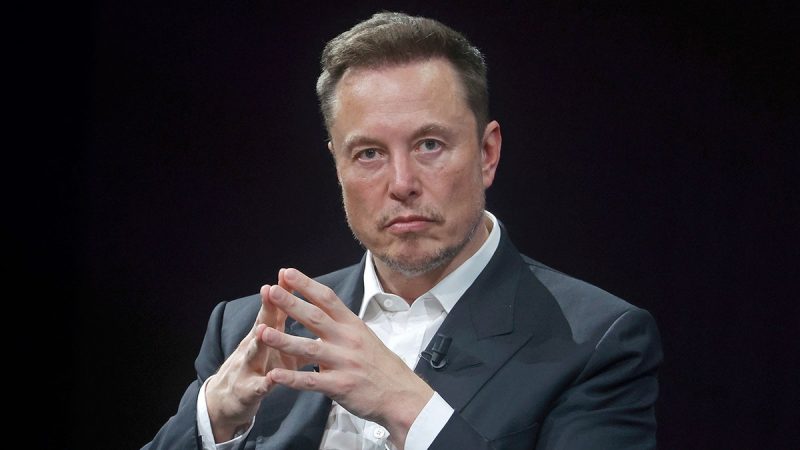
Business magnate Elon Musk suggested that anti-white male propaganda is ‘a major driver of’ members of that demographic adopting transgender identity.
‘My observation is that a major driver of white males becoming trans is the relentless propaganda portraying white men as the worst human beings,’ Musk wrote in a post on X.
‘If those lies land, especially during vulnerable teen years, and they are given an option to be a ‘celebrated’ group, some will do it,’ he added.
Someone responded to Musk’s post by writing, ‘Interesting theory. It may also explain why so many white women support trans mania despite the harm it causes them and their children.’
Musk replied with the 100 emoji, apparently expressing agreement.
One of Musk’s children identifies as transgender.
‘They call it deadnaming for a reason,’ Musk previously said during an interview with Jordan Peterson, saying, ‘my son Xavier is dead, killed by the woke mind virus.’

For decades, Democrats have clung to James Carville’s mantra: ‘It’s the economy, stupid.’ It became the default excuse for every campaign message, every strategy and every setback.
We need to retire that phrase from our political lexicon.
My fellow Democrats forget that Carville’s first rule on his whiteboard in Little Rock wasn’t the economy, stupid. It was ‘Change vs. more of the same.’ Voters still want change — not numbers, not excuses. And if President Donald Trump offers change while Democrats defend the system as it is, Democrats will lose.
Today, my party is jumping onto a shiny substitute considered to be the winning message that unites all — ‘affordability’ — as if the idea that lower prices are better than higher ones is a revelation. Has a candidate ever campaigned on the reverse?
During the Biden administration, consumer costs inflated on our watch, but now we are asking midterm voters to give us the keys back to the car anyway.
When is my party going to learn that politics is about culture and connection, not charts and spreadsheets? It’s about being relevant to the lives of ordinary people, not proving to them that we are right.
Voters aren’t sitting in some academic economics lecture. They don’t care about GDP growth, labor-force participation rates, or the Bureau of Labor Statistics when they feel prices are too high. They don’t want to hear that homicides, robberies and carjackings have decreased according to the latest stats, when they feel unsafe. Sending in the National Guard won’t be a solution to ending crime in our inner cities, but it does make communities feel protected.
Are Democrats so disconnected from reality that we’ve unlearned the most basic political principle of all, that perception and politics go hand-in-glove?
Voters are not looking to be informed by candidates, especially when they sound like human calculators, vomiting out numbers. Being informed isn’t the same as feeling informed and telling voters that how they feel isn’t real, because numbers say otherwise, isn’t a winning message. Shaming Trump voters for their choice last year or lecturing them that this isn’t what they voted for, offends them rather than persuades them. Patronizing voters is not a strategy.
What voters in this midterm election want is some cultural common sense, and to borrow a bullet from the Democratic talking points, Democrats have not been meeting voters where they are — yet.
Voters want to hear us acknowledge that crime is bad and say we need more cops on the street, but not necessarily troops. They want our candidates to give a straight answer and plainly state that boys shouldn’t compete in girls’ sports as a matter of fairness. It’s okay for Democrats to say they believe in merit-based hiring instead of DEI and box-checking quotas.
Most Americans feel this way — and Democrats lose credibility when they dodge these conversations or give evasive answers.
Democrats avoid going where the news and conversations are happening. Our leaders and candidates too often duck and cover. When issues turn culturally sensitive, they play hide and seek. We need to run straight into the culture war fires, not away from them. Those are the conversations voters are having and we need to join them.
My old boss, President Joe Biden, learned this lesson the hard way. Biden’s presidency illustrates this danger for Democrats on the ballot everywhere in 2026. At the very moments when Americans were craving leadership — like a national debate over college campus unrest and violent antisemitism — Biden was absent. Scranton Joe, who built his career on a chip-on-the-shoulder authenticity that connected with ordinary people, became the first non-Ivy League president in decades. Yet, he was silent when he could have drawn the sharpest contrast from the elites.
Biden told Americans the economy was the envy of the world, and then his Baghdad Bobs in the White House told us he was as sharp as ever. Polls said Americans felt otherwise, still his instinct was to retreat further. Voters saw fewer unscripted moments, such as interviews or news conferences, smaller steps off Air Force One and a greater reliance on teleprompters. In a political age where imagery shapes public opinion, Biden looked feeble, distant and disconnected. He followed an outdated media strategy that led him into a political death spiral.
Trump, by contrast, dives headfirst into every news cycle and runs into every cultural fire — from campus protests to celebrity dust-ups like Sydney Sweeney’s jeans or Cracker Barrel’s new logo. He doesn’t hesitate, he doesn’t duck, he doesn’t wait for the perfect poll-tested phrase. Love him or hate him, voters can’t miss that he shows up with an opinion and a position. He doesn’t keep them guessing.
Democrats don’t need to copy Trump’s style. But they do need his guts. If voters are talking about trans athletes, immigration, DEI or crime — and they stay silent or pivot — then they’re absent from the conversations Americans outside the Beltway are having with friends, family and their neighbors. It’s these social conversations that are shaping political identity, not stats and charts.
Voters will tune out any type of hell Democrats try to raise about prices, tariffs or cuts to Medicare if they think we don’t ‘get’ them on culture.
The way out of the wilderness isn’t another slogan about affordability. It’s courage and common sense. Stop hiding behind statistics. Start running into the fire. Only then will Democrats earn back voters’ trust.

Empire Metals (OTCQB:EPMLF, AIM:EEE) is unlocking one of the world’s largest and purest titanium deposits at its flagship Pitfield project in Western Australia. With growing global demand, a looming supply deficit, and near-term development milestones, Empire offers a compelling investment opportunity in the critical minerals space.
Empire Metals (OTCQB:EPMLF, AIM:EEE) is an Australian focused exploration and resource development company rapidly gaining international attention for its discovery and rapid development of what is believed to be the world’s largest titanium deposit.
The company is focused on advancing its flagship asset, the Pitfield project, located in Western Australia, a tier 1 mining jurisdiction. With a dominant landholding of more than 1,000 sq km, and a titanium mineral system that spans 40 km in strike length, Pitfield is emerging as a district-scale “giant” discovery with the potential to reshape the global titanium supply landscape.
Empire’s strategic focus on titanium comes at a pivotal time. Titanium is officially recognized as a critical mineral by both the European Union and the United States, owing to its essential role in aerospace, defense, medical technologies, clean energy and high-performance industrial applications. Global demand for titanium dioxide — the most widely used form of titanium — is surging due to its unmatched properties as a pigment and as a feedstock for titanium metal. Titanium supply chains are also increasingly being constrained by geopolitical risks, mine depletion and environmental challenges associated with traditional production. More than 60 percent of the global supply chain is currently concentrated in a handful of countries, notably China and Russia, creating significant vulnerabilities for Western markets.
Titanium has been designated as a critical mineral in both the EU and the US.
Against this backdrop, Empire Metals offers investors a compelling opportunity to gain exposure to a strategically vital metal through a large-scale, high-grade and clean titanium discovery. Unlike many traditional titanium sources, Pitfield’s mineralization is exceptionally pure — free from detrimental amounts of uranium, thorium, chromium and other contaminants — making it ideally suited for premium, high-purity end markets. Furthermore, the mineralized zone is near-surface and laterally extensive, allowing for low-strip and scalable bulk mining with conventional processing technologies.
With more than 22,000 meters of drilling already completed and only a fraction of the mineral system tested, Empire is aggressively advancing Pitfield towards a maiden JORC-compliant mineral resource estimate, targeted for H2-2025. Alongside this work, the company is also undertaking bulk sampling and metallurgical processing to advance flowsheet design and optimize product specifications. It is also engaging with industry players to assess product suitability for premium pigment and titanium sponge markets. Empire is planning to finalize, during the current calendar year, a mining study to evaluate the potential for a low-cost strip mining approach, utilizing continuous mining techniques.
The company is supported by a seasoned leadership team with deep expertise in exploration, resource development, mining, metallurgy and capital markets — ensuring that strategic decisions are guided by both technical excellence and a strong track record of value creation.
Located in Western Australia, the Pitfield project is Empire Metals’ flagship asset and represents one of the most exciting titanium discoveries globally. Spanning an area of approximately 1,042 sq km, the project has revealed a colossal mineral system measuring 40 km in length and up to 8 km in width, with geophysical indications of mineralization extending to at least a depth of 5 km.
Pitfield’s prime location in Western Australia
Extensive drilling across the project has intercepted thick, laterally continuous zones of high-grade titanium dioxide mineralization, highlighting the system’s enormous scale and consistency.
The titanium at Pitfield occurs predominantly in the minerals anatase and rutile within a weathered, in-situ cap that begins at surface. These minerals are exceptionally pure, often exceeding 90 percent titanium dioxide. They are free from harmful amounts of contaminants like uranium, thorium, chromium and phosphorus — qualities that are likely to make the deposit uniquely suitable for premium, high-purity titanium applications in aerospace, defense and clean technologies.
Pitfield is strategically located near the town of Three Springs, approximately 150 km southeast of the port city of Geraldton. The project benefits from direct access to essential infrastructure, including sealed highways, rail lines and an available water supply. This connectivity significantly enhances development potential by reducing logistics costs and simplifying future project build-out. Moreover, the Western Australian government actively supports critical mineral development, and Empire is operating within a stable, mining-friendly jurisdiction known for streamlined permitting and investment security.
Empire has completed more than 22,000 meters of drilling, confirming standout titanium dioxide (TiO2) results such as 154 meters at 6.76 percent TiO2, 148 meters at 6.49 percent TiO2, and 150 meters at 6.44 percent TiO2. Notably, mineralization remains open at depth in all tested zones, and to date, only around 5 percent of the interpreted system has been drilled. This underscores the immense upside potential for resource expansion.
The project’s development advantages are equally compelling: the mineralization is near-surface and amenable to simple, bulk mining methods with conventional processing. Its location in a tier-one mining jurisdiction offers access to infrastructure, a skilled workforce and strong regulatory support.
The Pitfield project presents a scalable processing pathway. Photo shows a gravity flotation test in process (left) and a close-up of a flotation test (right)
Pitfield is advancing toward a maiden JORC-compliant mineral resource estimate, expected by H2-2025. The project is already being recognized as a potential cornerstone asset in the global titanium supply chain.
In August 2025, Empire Metals achieved a metallurgical breakthrough, confirming that conventional processing can deliver strong results. Testwork returned 77 percent recovery in the rougher stage, 90 percent in cleaning, and 98 percent titanium dissolution, for an overall 67 percent titanium recovery. The process produced a high-purity TiO₂ concentrate grading 99.25 percent with ~5 percent Fe₂O₃, supporting plans for a lower-cost pilot plant.
In addition to Pitfield, Empire Metals maintains a portfolio of early-stage exploration assets offering optionality and exposure to other strategic and precious metals. Empire holds interests in two Western Australian projects — the Walton and Eclipse gold projects — both situated in historically productive mineral belts. While these assets are not the current focus, they contribute exploration upside and optionality within the company’s broader strategy.
Neil O’Brien is the former SVP exploration and new business development at Lundin
Mining, until he retired in 2018. He has an extensive global mining career as a PhD economic geologist, exploration leader and board executive.
Shaun Bunn is a metallurgist based in Perth, Western Australia, with expertise in international exploration, mining, processing and development. He has a successful track record managing mining projects through all stages of development.
Based in London, Greg Kuenzel is a chartered accountant, and corporate finance and financial management expert. He has extensive experience working with resources-focused AIM listed companies.
With more than 20 years of corporate and finance experience focused in the natural resources sector, Peter Damouni holds executive and director roles in TSXV and LSE listed companies where he has played key roles in significantly enhancing shareholder value.
Phil Brumit is a veteran mining engineer and operations expert, delivering major global operations. His previous roles include international leadership positions at Freeport-McMoRan, Lundin Mining and Newmont Corporation.
Narelle Marriott is a former BHP senior process engineer. Most recently, she was the general manager for process development for Hastings Technology Metals.
Andrew Faragher is a former Rio Tinto exploration manager with more than 25 years of experience working across multiple commodities.
Arabella Burwell is a former Senior Director Corporate Development at NASDAQ-listed GoDaddy and a Partner, Capital Raising and Strategic Partnerships, at Hannam & Partners in London and South Africa.
Carrie brings over 20 years of international experience in environmental management, project development, regulatory approvals, and impact assessment. Her expertise spans mine closure and reclamation, stakeholder engagement, and the remediation of contaminated sites. She has led projects across Australia (Western Australia and Victoria) and New Zealand and has also contributed to initiatives in Malawi and Greenland.
David Parker brings over 20 years of experience in equity capital markets, with a strong focus on the mining, industrial, and technology sectors. He has held senior roles as director and company secretary for several ASX-listed companies, providing strategic leadership and commercial oversight across diverse corporate environments.