Carbonxt Group (CG1:AU) has announced Placement to Fund Further Investment in New Carbon
Download the PDF here.
This post appeared first on investingnews.com



Carbonxt Group (CG1:AU) has announced Placement to Fund Further Investment in New Carbon
Download the PDF here.
The lithium market heads into 2026 after one of its most punishing years in recent memory, shaped by deep oversupply, weaker-than-expected electric vehicle (EV) demand and sustained price pressure.
In 2025, lithium carbonate prices in North Asia sank to four year lows, forcing production cuts and project delays as the industry grappled with the consequences of years of aggressive supply growth.
The second half of the year saw a rebound as lithium carbonate began a slow ascent. By December 29, prices had risen 56 percent from their January start position of US$10,798.54 per metric ton to US$16,882.63.
While volatility and brief price rallies highlighted the market’s sensitivity to sentiment and policy signals, analysts increasingly see the sector’s first-half downturn as an inflection point. With high-cost supply under strain and inventories gradually tightening, expectations are building that 2026 could mark the start of a rebalancing phase, supported by long-term demand tied to electrification, energy storage and the broader energy transition.
Energy storage is emerging as the fastest-growing pillar of battery demand, with major implications for the lithium market heading into 2026. Indeed, according to Benchmark Mineral Intelligence’s Iola Hughes, growth in this segment is accelerating well ahead of the broader battery market.
“We’re expecting about 44 percent growth (in 2025),” she said. That’s compared with roughly 25 percent growth across total battery demand. As a result, energy storage is set to account for about a quarter of total global battery demand in 2025, a share that is rising rapidly. The shift is even more pronounced in the US, where Hughes expects storage to make up a significant “35 to 40 percent of battery demand in the next few years.”
That growth is being driven by falling costs and the growing role of lithium iron phosphate (LFP) chemistry, which Hughes described as the dominant technology in stationary storage.
“It very much is the story of LFP right now,” she said, pointing to recent innovation and lower costs, which have helped to make LFP “the best chemistry” for most storage applications.
Globally, deployment remains highly concentrated. China and the US account for roughly 87 percent of cumulative grid-scale storage installations, but new markets are emerging quickly.
Saudi Arabia, Hughes noted, has surged from effectively zero to the world’s third largest market in a matter of months, deploying around 11 gigawatt-hours in the first quarter alone. “That really goes to show just how early this market is in its story,” she said; it also indicates how quickly new sources of battery demand can materialize.
Cost declines sit at the core of the expansion. Fully integrated storage systems in China are now approaching, and in some cases falling below, US$100 per kilowatt-hour. Hughes said this has fundamentally changed the economics of storage, making deployments viable even as policy support tightens. “The prices are so much cheaper, the economics are a lot stronger, even in a normal, unsubsidized environment,” she said.
In the US, growth remains concentrated in a handful of states — led by California and Texas — but Hughes stressed how early stage the market still is. New Mexico, now the fifth largest storage market, is built on just a few projects.
At the same time, the scale of energy storage projects is increasing rapidly. Giga-scale installations, defined as projects larger than 1 gigawatt-hour, are moving from novelty to norm.
Hughes said nine such projects are expected to come online this year, accounting for about 20 percent of battery demand, with more than 20 in the pipeline for next year, representing close to 40 percent.
Policy remains a key variable. While investment tax credits for storage remain in place in the US, Hughes warned that tighter sourcing and eligibility rules are reshaping supply chains, particularly for LFP. The pipeline of announced LFP gigafactories has grown sharply this year — up more than 60 percent — led largely by Korean manufacturers.
“We’re in a much better position when it comes to sourcing of cells for energy storage than we were even three months ago,” she said, though challenges remain around production tax credits and heavy reliance on Chinese cathode supply.
Underlying the storage boom is a broader shift in electricity demand.
After more than a decade of stagnation, US power demand is rising again, driven by data centers, AI, electrification and reshoring of manufacturing. Hughes said estimates now point to electricity demand rising 20 to 30 percent by 2030, placing energy storage at the center of energy security planning. “Storage has become a central topic in the energy security conversation,” she said, adding that its role will only grow.
Looking ahead, Hughes said LFP is likely to dominate shorter-duration storage, while sodium-ion and other battery technologies compete in longer-duration segments.
For the lithium market, the message is clear: as storage scales up in size, geography and strategic importance, it is becoming one of the most powerful demand drivers shaping the sector’s outlook for 2026 and beyond.
Howard Klein, RK Equity co-founder and partner, argued that falling costs remain a central driver of LFP battery adoption, reflecting a familiar economic dynamic: as prices decline, demand accelerates.
While lithium is a key input, he suggested that ongoing manufacturing efficiencies and economies of scale are likely to continue pushing LFP battery costs lower over time, potentially offsetting upward pressure from higher lithium prices.
Klein emphasized that even if LFP costs rise modestly, battery storage will remain highly competitive as a source of grid power. Compared with conventional generation options such as gas or coal, storage already offers a compelling cost and performance proposition, he said, and does not rely solely on subsidies to remain economically viable.
Critical minerals are increasingly at the center of US foreign policy, and that shift is set to reshape the lithium value chain through 2026, according to Klein. He noted that geopolitics now underpins many of Washington’s strategic priorities, from Eastern Europe to Africa and the Arctic.
“The entire foreign policy agenda is largely being driven by critical minerals,” Klein said, citing regions including Ukraine, Russia, the Democratic Republic of Congo, Greenland and Canada.
China’s willingness to weaponize its dominance in key supply chains has sharpened that focus.
On that note, Klein pointed to Beijing’s renewed rare earths export restrictions in October, noting that these measures were applied globally, not just against the US.
“They showed that they wield a significant negotiating stick, and they’re willing to use it,” he said.
In Klein’s view, that move has triggered a forceful response from western governments. “I think they’ve overplayed their hand to some degree, because now you’ve had this very big reaction from the US.”
That reaction is translating into a renewed push to localize and reshore critical mineral supply chains — an effort that has gained rare bipartisan backing in Washington.
“Unlike so many other things in America, which are hyper-partisan, both sides agree we need to resolve this,” Klein said, adding that the policy momentum will continue to shape the lithium industry.
While rare earths remain the immediate pressure point, Klein said the policy lens is widening. The US recently added 10 minerals to its critical minerals list, which now stands at a total of 60. Lithium, he said, sits high on that agenda, not out of enthusiasm for the metal itself, but because of its role in batteries.
“It’s an understanding by the government that batteries and battery technology are very, very important, and the entire battery supply chain needs to be supported,” Klein said. That support extends beyond lithium to graphite, manganese, nickel, cobalt and battery components such as anodes and cathodes.
The approach is increasingly coordinated across western economies. Klein described it as “a G7 effort,” with the EU and Canada aligned alongside the US through a mix of bilateral and multilateral initiatives.
That coordination is already translating into capital flows. He pointed to US-backed progress at Thacker Pass, EU funding for Vulcan Energy Resources (ASX:VUL,OTC Pink:VULNF) and a 360 million euro grant for European Metals Holdings (LSE:EMH,ASX:EMH,OTCQB:EMHLF) as early examples. Canada, he added, is also ramping up support.
“Canada announced C$6 billion over 26 investments,” Klein said, adding that more announcements are likely by the time the Prospectors & Developers Association of Canada convention rolls around in March.
Klein sees geopolitics, industrial policy and supply chain security converging into powerful lithium tailwinds. “This is a super hot topic,” he said, and one that is likely to drive increased lithium-related activity well into 2026.
To dilute China’s grip on the sector, Klein is advocating for a strategic lithium reserve in the US as a more effective and market-neutral alternative to company-specific subsidies. He argues that the industry’s core challenge is not demand, but extreme price volatility caused by global oversupply and what he describes as non-market behavior, which has driven prices below sustainable levels and distorted investment signals across the sector.
“The problem in lithium is volatile prices — prices below the marginal cost, catastrophically low prices that put companies out of business,” he said, pointing to persistent oversupply as the primary distortion.
In Klein’s view, a reserve would act as a counterweight by creating steady, large-scale demand that stabilizes prices within a sustainable range. “The main focus is to stabilize price … not at a super high level, but at a level where companies can make an economic return,” he said. That stability, he added, is essential to incentivize investment in mines, processing and conversion facilities across the US, Canada and allied jurisdictions.
Unlike targeted government support, Klein said a reserve would allow the market to determine which projects succeed.
“I want the market to decide which projects and companies are the best, not necessarily the government,” he said, noting the diversity of competing lithium resources, from US clay and brine projects to Canadian hard-rock deposits.
A more predictable price environment with fewer large swings would lower the cost of capital and give private investors greater confidence to finance viable projects.
Klein stressed that a lithium reserve should not be confused with a stockpile.
“People use ‘stockpile’ and ‘reserve’ like they’re the same thing, and they’re not,” he said. While a stockpile focuses on availability for emergencies, a reserve is designed as a market-stabilizing mechanism that can buy and sell material to smooth volatility. Availability, he said, is a secondary benefit.
He sees the concept as most relevant for mid-sized, fast-growing markets like lithium, graphite and other battery materials that lack deep futures markets and long-term hedging tools.
“Those are the markets that could be amenable to a reserve,” he said, contrasting them with large, liquid commodities like copper or very small, niche minerals tied mainly to military use.
Looking longer term, Klein said a lithium reserve aligns closely with the growth of EVs, energy storage, data centers and grid electrification, as well as geopolitical efforts to diversify supply chains away from China.
“This is no longer just a renewables or EV thing — this is national security, clean energy and building an electro-state,” he said, arguing that reducing volatility would make it easier for automakers, utilities and manufacturers to commit capital without fear of being caught on the wrong side of wild price swings.
Gerardo Del Real, publisher at Digest Publishing, also highlighted the impact of geopolitics on the lithium value chain, emphasizing the need for North American coordination to reduce reliance on dominant producers like China.
“I think this is the path towards that. It has to happen,” he said, noting that collaboration between the US, Canada and potentially Mexico could strengthen regional supply security and reduce vulnerability to global disruptions.
Del Real framed the issue in broader energy terms, pointing to the strategic value of domestic resources: “If we are serious as a country and as a region in being somewhat independent from China and from the Russians … we have a luxury of resources in the US, in Canada … there could be a very powerful path forward.”
On market dynamics, he suggested investors are focused on timing and catalysts, with policy shifts, demand surprises or supply disruptions likely to drive sentiment in 2026.
He also warned that the market may be underestimating the importance of coordinated regional supply initiatives as a factor shaping pricing and project economics.
Securities Disclosure: I, Georgia Williams, hold no direct investment interest in any company mentioned in this article.
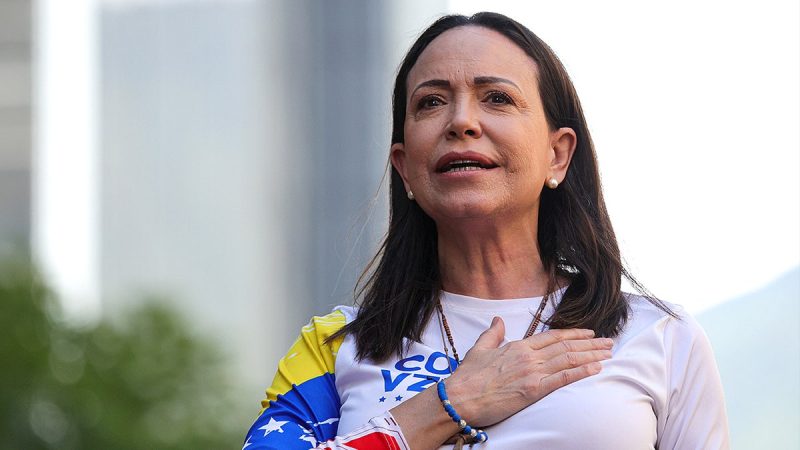
Venezuelan opposition leader María Corina Machado issued an open call for a transfer of power Saturday, urging the military to abandon Nicolás Maduro’s government and recognize opposition-backed candidate Edmundo González as president after the U.S. said Maduro had been captured.
Machado’s statement came hours after President Donald Trump announced that U.S. forces had captured Maduro following what he described as ‘large-scale’ military strikes targeting the Venezuelan government. Trump said Maduro and his wife were flown out of the country, a move that would mark the most direct U.S. military action against a Latin American head of state in decades.
‘The hour of freedom has arrived,’ wrote in a post on X. ‘This is the hour of the citizens. Those of us who risked everything for democracy on July 28th. Those of us who elected Edmundo González Urrutia as the legitimate President of Venezuela, who must immediately assume his constitutional mandate and be recognized as Commander-in-Chief of the National Armed Forces by all the officers and soldiers who comprise it.’
It remained unclear Saturday whether senior commanders have shifted allegiance or whether the opposition has secured control of state institutions.
Machado also called on Venezuelans inside the country to remain ‘vigilant, active and organized,’ signaling that further instructions would be communicated through official opposition channels. To Venezuelans abroad, she urged immediate mobilization to pressure foreign governments to recognize a new leadership in Caracas.
The U.S. conducted strikes on Caracas early Saturday morning and took Maduro and his wife into custody and flew them to New York to face drug trafficking charges.
Machado and González have repeatedly argued that the July 28 presidential election was stolen, pointing to an opposition-run parallel vote count that they say shows González won by a wide margin.
Venezuela’s electoral authorities, which are controlled by Maduro allies, declared him the winner with just under 52% of the vote, compared with roughly 43% for González. The government has rejected allegations of fraud.
The opposition, however, says it collected and published tally sheets from polling stations nationwide showing González received about two-thirds of the vote, compared with roughly 30% for Maduro — a claim cited by several foreign governments that declined to recognize the official results.
Maduro’s government has refused to release detailed precinct-level data to independently verify the outcome, further fueling accusations that the election did not reflect the will of voters.
While González is the opposition-backed presidential candidate, Machado has remained the dominant figure in Venezuela’s opposition movement. Machado won the opposition’s primary by a landslide before being barred from running by Maduro’s government, forcing the coalition to rally behind González as a substitute candidate.
Throughout the campaign, González publicly acknowledged Machado as the movement’s leader, with Machado continuing to direct strategy, messaging and voter mobilization efforts. Machado has remained the public face of the opposition, while González has largely played a formal, constitutional role tied to the presidency.

President Donald Trump’s House GOP critics are ripping the administration’s operation in Venezuela that resulted in the capture of the country’s president, Nicolás Maduro.
Rep. Thomas Massie, R-Ky., was the first to criticize the Trump administration’s operation in Venezuela, again breaking from the majority of his party and butting heads with the commander-in-chief.
Massie, a longtime critic of U.S. foreign intervention, appeared to question the legality of the federal government’s Venezuela strikes.
‘If this action were constitutionally sound, the Attorney General wouldn’t be tweeting that they’ve arrested the President of a sovereign country and his wife for possessing guns in violation of a 1934 U.S. firearm law,’ Massie posted to X on Saturday morning.
The Department of Justice (DOJ) unsealed a four-count indictment against Maduro after Trump confirmed the U.S. took custody of the Venezuelan leader and his wife following strikes in the capital of Caracas.
Attorney General Pam Bondi said in a statement those charges were ‘Narco-Terrorism Conspiracy, Cocaine Importation Conspiracy, Possession of Machineguns and Destructive Devices, and Conspiracy to Possess Machineguns and Destructive Devices against the United States.’
It’s not immediately clear what Maduro’s wife, Celia Flores, has been charged with.
In a follow-up posted on the charges, Massie said, ’25-page indictment but no mention of fentanyl or stolen oil. Search it for yourself.’
Trump said on Fox News that Maduro and Flores were being flown to the U.S.S. Iwo Jima, which will bring them to the U.S. where they will face criminal proceedings led by the Southern District of New York.
Massie’s criticism was followed by scathing comments by Rep. Marjorie Taylor Greene, R-Ga., another Trump critic who is retiring from Congress early next week before finishing her term.
‘If U.S. military action and regime change in Venezuela was really about saving American lives from deadly drugs, then why hasn’t the Trump admin taken action against Mexican cartels? And if prosecuting narco terrorists is a high priority, then why did President Trump pardon the former Honduran President Juan Orlando Hernández, who was convicted and sentenced for 45 years for trafficking hundreds of tons of cocaine into America?’ part of Greene’s statement read.
‘The next obvious observation is that by removing Maduro this is a clear move for control over Venezuelan oil supplies that will ensure stability for the next obvious regime change war in Iran. And of course, why is it ok for America to militarily invade, bomb, and arrest a foreign leader, but Russia is evil for invading Ukraine and China is bad for aggression against Taiwan? Is it only ok if we do it? (I’m not endorsing Russia or China).’
Meanwhile, Rep. Don Bacon, R-Neb., praised the operation itself but expressed concerns about what precedent is being set.
‘My main concern now is that Russia will use this to justify their illegal and barbaric military actions against Ukraine, or China to justify an invasion of Taiwan,’ Bacon said in a statement. ‘Freedom and rule of law were defended last night, but dictators will try to exploit this to rationalize their selfish objectives.’
Bacon is also retiring from Congress, but unlike Greene, he is serving out his full term.
The vast majority of Republican lawmakers unequivocally backed the operation, as expected.
Senate Majority Leader John Thune, R-S.D., and House Speaker Mike Johnson, R-La., both said they expected congressional briefings from the Trump administration in the coming days when lawmakers return from a two-week recess.
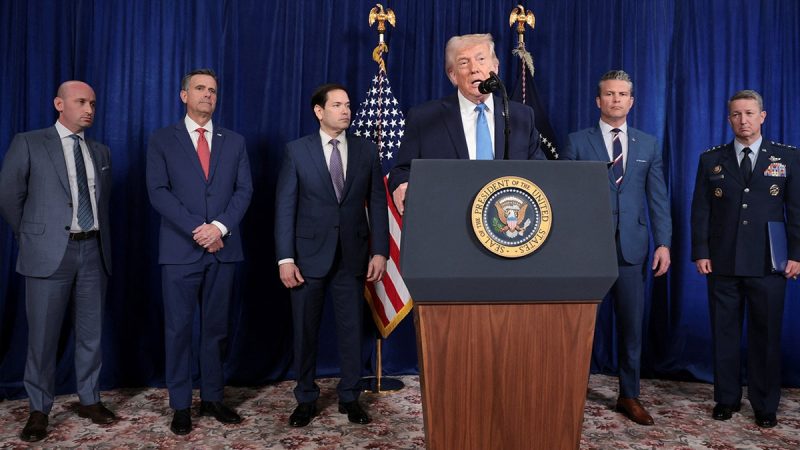
Vice President JD Vance was not physically present at President Donald Trump’s news conference announcing the capture of Venezuelan leader Nicolás Maduro because of heightened security and secrecy concerns, according to a spokesperson, despite being closely involved in the planning and execution of the operation.
Trump briefed the press on the mission hours after Maduro was taken into U.S. custody, flanked by Secretary of State Marco Rubio, War Secretary Pete Hegseth and chairman of the joint chiefs, Gen. Dan Caine.
Vance publicly praised the operation on X but did not attend the briefing. Vance did meet with Trump at Mar-a-Lago on Friday to discuss the strikes, but was not at Trump’s golf club Friday night where senior Trump officials monitored the mission because the national security team ‘was concerned a late-night motorcade movement by the Vice President while the operation was getting underway may tip off the Venezuelans.’
‘The Vice President joined by secure video conference throughout the night to monitor the operation. He returned to Cincinnati after the operation concluded.’
Due to ‘increased security concerns,’ Trump and Vance are limiting the ‘frequency and duration’ of time they spend together outside of the White House, the Vance spokesperson told Fox News Digital.
‘Maduro is the newest person to find out that President Trump means what he says,’ Vance wrote on X after the operation was made public.
‘And PSA for everyone saying this was ‘illegal’: Maduro has multiple indictments in the United States for narco-terrorism. You don’t get to avoid justice for drug trafficking in the United States because you live in a palace in Caracas,’ he wrote in a separate post.
Trump, during his news conference, revealed that the U.S. will ‘run’ Venezuela until a ‘safe, orderly’ transition of power can take place.
Pressed on whether U.S. forces would remain inside the country, Trump did not rule out a sustained troop presence. ‘They always say boots on the ground – so we’re not afraid of boots on the ground if we have to,’ he said, confirming U.S. troops were already involved ‘at a very high level’ during the operation.
Trump noted Venezuela’s vice president had been ‘picked by Maduro,’ but said U.S. officials were already engaging with her. ‘She’s essentially willing to do what we think is necessary to make Venezuela great,’ Trump said, adding that the issue was being handled directly by his team.
Venezuelan Vice President Delcy Rodriguez has been sworn in as Maduro’s successor, and Trump did not say whether the U.S. will move to install opposition leaders Maria Corina Machado and Edmundo Urutia-Gonzalez.
Vance, in the past, has voiced skepticism of U.S. interventions.
In a Signal chat leaked after the Houthi strikes last March, Vance told a group of Trump Cabinet officials, ‘I think we are making a mistake.’
‘[Three] percent of U.S. trade runs through the Suez Canal. Forty percent of European trade does. There is a real risk that the public doesn’t understand this or why it’s necessary,’ Vance said.
‘I am not sure the president is aware how inconsistent this is with his message on Europe right now.’
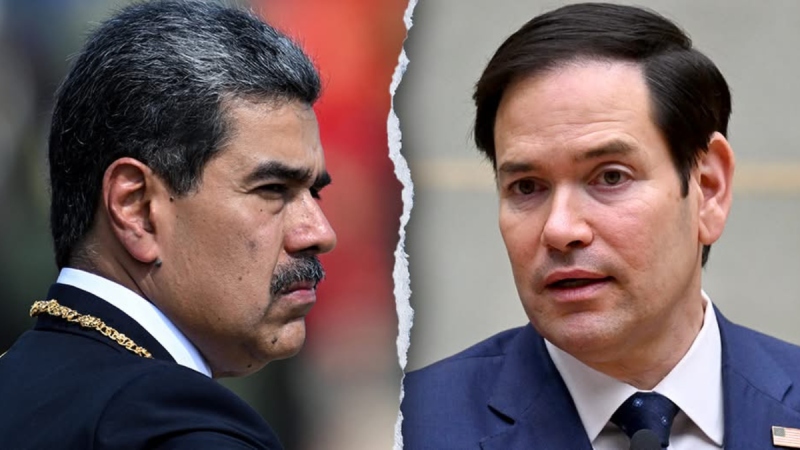
Cuban leaders should be concerned following the U.S. military operation in Venezuela and the arrest of Nicolás Maduro, Secretary of State Marco Rubio said Saturday, as President Donald Trump signaled that his administration could shift its focus to the Caribbean island.
Cuba has long maintained a presence in Venezuela, with intelligence agents and security personnel embedded amid close relations between Havana and Caracas.
Rubio, the son of Cuban immigrants, said Venezuela’s spy agency was ‘basically full of Cubans,’ as was Maduro’s security detail.
‘One of the biggest problems Venezuelans have is they have to declare independence from Cuba,’ he said during a news conference in which officials revealed details of the military operation. ‘They tried to basically colonize it from a security standpoint.’
He added that the communist island was ‘a disaster. It’s run by incompetent, senile men — and in some cases, not senile, but incompetent nonetheless.’
The secretary has repeatedly denounced Cuba and its leadership as a dictatorship and a failed state.
‘If I lived in Havana, and I was in the government, I’d be concerned — at least a little bit,’ Rubio said.
Trump said Cuba was something his administration would ‘end up talking about because Cuba is a failing nation right now — a very badly failing nation.’
‘And we want to help the people,’ he added. ‘It’s very similar in the sense that we want to help the people in Cuba, but we also want to help the people who were forced out of Cuba and are living in this country.’
Maduro and his wife, Cilia Flores, were taken by U.S. forces and brought aboard the USS Iwo Jima. They were expected to be transported to the U.S. to face federal charges.
The couple, along with other Venezuelan officials, face ‘drug trafficking and narco-terrorism conspiracies,’ according to an unsealed indictment posted on social media Saturday by U.S. Attorney General Pam Bondi.
They are accused of partnering with drug cartels to traffic drugs into the U.S.
Maduro and his wife ‘will soon face the full wrath of American justice on American soil in American courts,’ Bondi wrote.
They are charged with narco-terrorism conspiracy, cocaine importation conspiracy, possession of machine guns and destructive devices, and conspiracy to possess machine guns and destructive devices against the U.S.
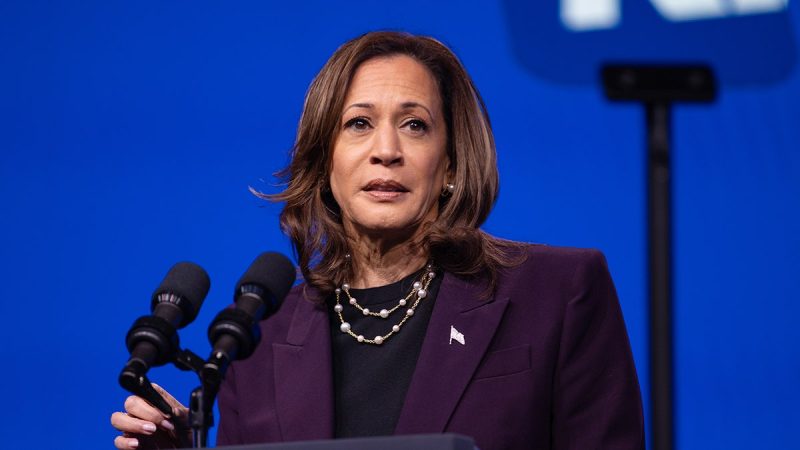
Former Vice President Kamala Harris on Saturday evening condemned the Trump administration’s capture of Venezuelan dictator Nicolás Maduro and his wife, calling the operation both ‘unlawful’ and ‘unwise.’
In a lengthy post on X, Harris acknowledged that Maduro is a ‘brutal’ and ‘illegitimate’ dictator but said that President Donald Trump’s actions in Venezuela ‘do not make America safer, stronger, or more affordable.’
‘Donald Trump’s actions in Venezuela do not make America safer, stronger, or more affordable,’ Harris wrote. ‘That Maduro is a brutal, illegitimate dictator does not change the fact that this action was both unlawful and unwise. We’ve seen this movie before.
‘Wars for regime change or oil that are sold as strength but turn into chaos, and American families pay the price.’
Harris made the remarks hours after the Trump administration confirmed that Maduro and his wife were captured and transported out of Venezuela as part of ‘Operation Absolute Resolve.’
The former vice president also accused the administration of being motivated by oil interests rather than efforts to combat drug trafficking or promote democracy.
‘The American people do not want this, and they are tired of being lied to. This is not about drugs or democracy. It is about oil and Donald Trump’s desire to play the regional strongman,’ Harris said. ‘If he cared about either, he wouldn’t pardon a convicted drug trafficker or sideline Venezuela’s legitimate opposition while pursuing deals with Maduro’s cronies.’
Harris, who has been rumored as a potential Democratic contender in the 2028 presidential race, additionally accused the president of endangering U.S. troops and destabilizing the region.
‘The President is putting troops at risk, spending billions, destabilizing a region, and offering no legal authority, no exit plan, and no benefit at home,’ she said. ‘America needs leadership whose priorities are lowering costs for working families, enforcing the rule of law, strengthening alliances, and — most importantly — putting the American people first.’
Maduro and his wife arrived at the Metropolitan Detention Center in Brooklyn late Saturday after being transported by helicopter from the DEA in Manhattan after being processed.
Earlier in the day, Trump said that the U.S. government will ‘run’ Venezuela ‘until such time as we can do a safe, proper and judicious transition.’
Harris’ office did not immediately respond to Fox News Digital’s request for comment.
Fox News Digital’s Jasmine Baehr contributed to this report.

To kick it off, our team asked nine experts to share their highest-conviction sectors.
Here’s what they had to say.
Peter Schiff of Euro Pacific Asset Management and Schiff Gold mentioned silver too, although he also said he sees mining stocks overall doing well.
Similarly, Craig Hemke of TFMetalsReport.com is bullish on silver, but said his choice for top-performing asset of 2026 would be silver-mining stocks.
Unsurprisingly, Rick Rule of Rule Investment Media went outside the box.
Gareth Soloway of VerifiedInvesting.com also had an alternate take. Although he believes gold will perform well in 2026, he said it won’t necessarily be the top-performing asset.
Finally, Clem Chambers of aNewFN.com spoke about why he sees promise in Intel.
Securities Disclosure: I, Charlotte McLeod, hold no direct investment interest in any company mentioned in this article.
After a steep decline during the first half of 2025, the zinc price is ending the year close to where they started.
Because it’s used to make galvanized steel, the majority of zinc demand is closely tied to housing and manufacturing sectors, which have recently faced pressures from a combination of high inflation and interest rates.
Additional pressures have come from an evolving US trade policy, causing uncertainty among investors who turned away from real estate and consumers who reduced spending.
The zinc price was relatively flat at the start of 2025, beginning the year at US$2,927 per metric ton (MT) on January 2 and closing the first quarter at US$2,855 on March 30. However, the second quarter brought a broad rout for base metals prices, and by April 9 zinc had fallen to a yearly low of US$2,562.
Since then, zinc has gained steadily, ending the second quarter at US$2,753 on June 30. The price rise continued through Q3 and Q4, with zinc reaching US$2,954 on September 30 and US$3,088 on December 29.
Zinc price, 2025.
Chart via the London Metal Exchange.
As mentioned, zinc saw a major price decline at the start of April, falling 14 percent as the base metals sector responded to US President Donald Trump’s “Liberation Day” tariffs announcement.
At the time, analysts predicted that the proposed reciprocal tariffs could trigger a recession, impacting consumer spending on new homes and cars, both of which have significant inputs of galvanized steel.
While the threat of a significant global recession eased as the proposed tariffs were dialed back, considerable uncertainty among both investors and consumers remained. This was evident in the US housing market, where affordability challenges persist, leading to stagnation in new housing starts and a glut of unsold homes.
Likewise, a stalled Chinese housing market persisted throughout 2025. The country’s real estate market collapsed in 2020 as Evergrande and Country Garden filed for bankruptcy. Over the past five years, the government has implemented several measures to stimulate the beleaguered sector, but they have had little effect.
According to CNBC, November sales from China’s top 100 developers declined 36 percent over 2024, and were down 19 percent through the first 11 months of 2025 — a ‘real and concerning’ worsening.
Against that backdrop, the International Lead and Zinc Study Group (ILZSG) is predicting a 2025 zinc market surplus of 85,000 MT in 2025. It notes that during the first 10 months of the year, zinc mine production rose to 10.51 million MT, up from 9.87 million MT in 2024. Refined zinc production was also up, rising slightly to 11.52 million MT from 11.12 million MT in the same period last year. Zinc demand reached 11.44 million MT, up from 11.19 million MT in 2024.
Despite the oversupply situation, London Metal Exchange (LME) stockpiles fell from 230,325 MT on January 2 to just 33,825 MT on November 1. The gap has since widened again, reaching 52,025 MT on November 28.
Oversupply is likely to persist as newly mined metals enter the market, while demand growth remains modest.
The ILZSG is predicting that global refined zinc demand will increase by 1 percent to 13.86 million MT in 2026.
The group notes that while it anticipates sees Chinese demand posting a 1.3 percent gain in 2025, it believes usage from the country will be flat in 2026 as the slump in the Chinese real estate sector persists into 2027.
Additional challenges are arising from a slowdown in the US housing market, as new buyers face high home prices and elevated mortgage rates. However, policy proposals from the Trump administration on December 17 could give the sector a much-needed boost and potentially increase downstream demand for zinc.
Likewise, European zinc demand is likely to grow next year following predicted 0.7 percent growth in 2025.
However, the ILZSG is predicting a more significant upward trend in zinc mine supply in 2026 — the organization is anticipating that output will increase by 2.4 percent to 12.8 million MT. This will come on the back of higher output from existing operations in Europe, Australia, Brazil, the Democratic Republic of Congo and China.
Additional zinc supply will come from a recent restart at the Almina-Minas Aljustrel mine in Portugal, commissioning of Bunker Hill Mining’s (CSE:BNKR,OTCQB:BHLL) namesake mine in Idaho, and the start of commercial production at the Xinjiang Huoshaoyun mine in China, which will be the sixth largest lead-zinc mine in the world.
Refined zinc output is also expected to increase by 2.4 percent in 2026, reaching 14.13 million MT from the anticipated 13.8 million MT in 2025. The higher levels are owed to the greater availability of concentrates in Brazil, Canada, Norway and China. Overall, the ILZSG predicts a global zinc supply surplus of 271,000 MT in 2026.
In terms of the zinc price in 2026, a December report from Fastmarkets suggests that upward momentum from the 2025 LME average of US$3,218 is expected to continue through the first half of the year.
The firm points to regional disparities as Chinese production runs at a surplus, while the rest of the world falls short.
However, the expectation is that the zinc market will achieve a better balance in the second half of the year and into 2027 as global surpluses begin to emerge. Zinc prices are then seen declining as a result.
For its part, Morgan Stanley (NYSE:MS) recently revised its zinc price outlook for 2026, calling for a yearly average of US$2,900 for the base metal, as per a mid-December Reuters article.
Additionally, according to a November Argus report, long-term zinc contracts have slowed amid low LME inventories, creating near-term uncertainty and driving prices higher.
Argus suggests that manufacturers have been slow to issue sales orders, which has caused uncertainty among producers, leaving them to take a wait-and-see approach to determine if low inventories persist.
It’s also important to note that zinc is listed as a critical mineral in the US for its use in the production of galvanized steel for infrastructure and defense projects. The US has already given South32’s (ASX:S32,OTC Pink:SHTLF) Hermosa project FAST-41 approval, giving it access to streamlined regulatory processes.
With building regional disparities and a tense relationship between the US and China, the world’s top zinc producer, a deteriorating trade status could be a boon for US and western producers of the metal.
However, as long as refined supply of zinc remains in surplus against a backdrop of weak demand growth, investors can expect more of the same from zinc markets in the near term. This may open up opportunities for patient or less risk-averse investors who are willing to take a wait-and-see approach to how the market evolves.
Securities Disclosure: I, Dean Belder, hold no direct investment interest in any company mentioned in this article.
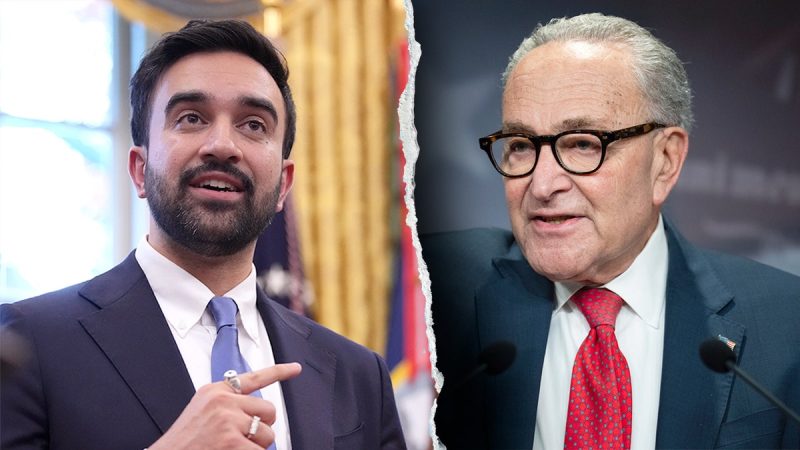
Senate Minority Leader Chuck Schumer, D-N.Y., remained silent Friday when his office was asked about New York City Mayor Zohran Mamdani’s day one orders that drew backlash from the international Jewish community.
Among his first actions as mayor, Mamdani revoked orders by his predecessor, Eric Adams, including Executive Order 61, which provided additional NYPD security to synagogues in the city and axed the definition of antisemitism adopted by the International Holocaust Remembrance Alliance (IHRA).
He also overturned a restriction on boycotting Israel put in place by Adams.
‘On his very first day as New York City mayor, Mamdani shows his true face: He scraps the IHRA definition of antisemitism and lifts restrictions on boycotting Israel,’ the Israeli Foreign Ministry wrote in a post on X.
Schumer’s office did not respond to Fox News Digital’s multiple requests for comment on whether he supported Mamdani’s decisions or what message the Jewish communities in New York City should take away from them.
Schumer previously shied away from taking any stance on Mamdani after it became apparent the socialist candidate would capture the Democratic nomination for mayor.
‘We are continuing to talk,’ Schumer said whenever asked if he would extend an endorsement.
His silence on his support continued even as Mamdani refused to outright denounce the use of the phrase ‘Globalize the intifada,’ a saying used by critics of Israel to advocate for the removal of the Jewish state. At the time, Mamdani’s posture toward the phrase drew condemnations and alarm from pro-Israel advocates.
Now with Mamdani in office, allies of Israel believe the new mayor’s posture could already prove a dangerous one.
The Consul General of Israel in New York, Ambassador Ofir Akunis, said the revocations ‘pose an immediate threat to the safety of Jewish communities in New York City and could lead to an increase in violent antisemitic attacks throughout the city.’
In the wake of several antisemitic attacks in recent weeks, Schumer, the highest-ranking Jewish elected official in the United States, has said the country must soundly condemn antisemitism ‘at every turn.’
After the deadly Bondi Beach shooting in mid-December that left 15 victims dead at a Jewish community event, Schumer maintained that the Jewish people had been uniquely targeted.
‘The Jewish people have been collectively demonized. Our collective humanity demands we come together no matter our race, religion, our nationality and forcefully rebuke those forces,’ Schumer said. ‘As I have warned repeatedly, antisemitism is a scourge around the world.’
Fox News Digital’s Morgan Philips contributed to this report.