South Harz Potash Limited (SHP:AU) has announced SHP Secures 25km Copper-Gold Corridor in Sweden
Download the PDF here.
This post appeared first on investingnews.com



South Harz Potash Limited (SHP:AU) has announced SHP Secures 25km Copper-Gold Corridor in Sweden
Download the PDF here.

Metals Australia (MLS:AU) has announced High Copper Anomalies Show Deeper Potential at Warrego East
Download the PDF here.
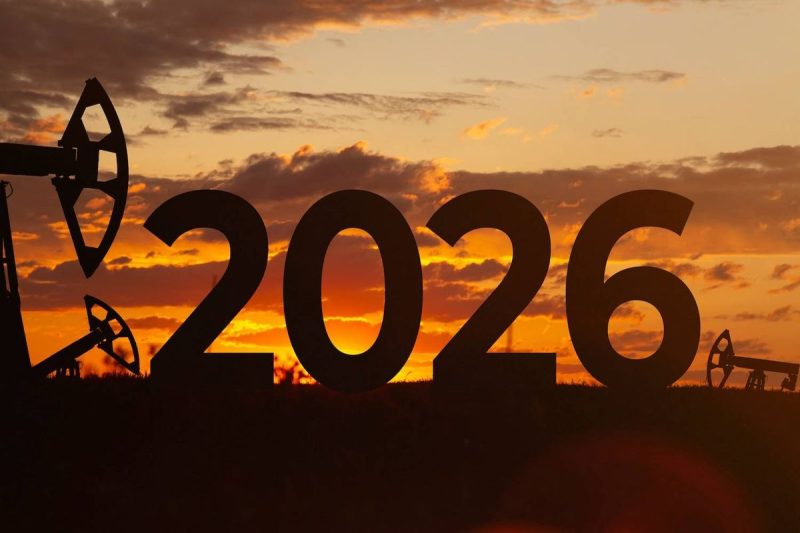
The oil and gas market was punctuated with volatility in 2025.
Oil prices softened as supply outpaced demand and inventories built. Brent and West Texas Intermediate (WTI) crude slipped in late 2025, with Brent dipping below US$60 per barrel and WTI hovering at US$55.
Production increases from non-OPEC producers — including record US output — and higher OPEC+ quotas have contributed to a notable supply overhang, pressuring crude toward four year lows.
Starting the year above US$70, both Brent and WTI prices have now seen steep declines of more than 20 percent amid signs of weaker demand in major economies like China and elevated global stocks.
Meanwhile, the natural gas market saw price shifts driven by weather and storage dynamics.
Prices started the year at US$3.64 per million British thermal units and slipped to a seasonal low of US$2.74 in August. Values peaked at US$5.31 on December 5, and have since retreated to the US$3.94 level.
The US Energy Information Administration (EIA) raised its outlook for late 2025 and early 2026 gas prices after an early cold snap bolstered heating demand, even as forecasts have moderated Henry Hub projections for 2025 to 2026.
2025 saw oil prices fluctuate between highs of US$81.86 (Brent) and US$78.99 (WTI) and lows of US$59.41 and US$55.56, respectively, as the energy market served as a barometer of global political and trade tensions.
“Throughout the year, prices have continued the downtrend they began in April (2024) as OPEC+ continued to hike output and China’s economy continued to struggle under the weight of a flailing property sector, downbeat consumer confidence, overindebted local governments and flagging external demand,” he added.
While the oil market isn’t new to volatility, this year proved different as US President Donald Trump’s on-again, off-again tariffs infused global uncertainty into the energy market.
“We can see that Trump’s ‘Liberation Day’ tariffs pushed prices down to a level from which they’ve not recovered from, barring a spike in June as a result of the 12 day Iran-Israel war,” said Cunningham.
“Since then, Brent crude oil prices have continued to fall as OPEC+ caught the market off guard with its aggressive output hikes, which were designed to win back market share from non-cartel producers.’
Meanwhile, OPEC is approaching full production capacity, with Saudi Arabia being the main exception.
“Even though people are talking about lots of supply, demand is still growing,” Schachter said, noting that global oil demand rose roughly 1.3 million barrels per day in 2025 and is expected to increase by about 1.2 million in 2026.
New supply additions are limited, he explained, mentioning Guyana’s offshore discoveries by ExxonMobil (NYSE:XOM), some output from Brazil and minor contributions from Canada.
“Most basins are tired, and not enough money is being spent to bring on production,” Schachter said, predicting that global inventory drawdowns in 2026 will support higher prices.
Despite lack of investment at the exploration level, FocusEconomics panelists are forecasting a rise in both oil and gas supply in 2026 fueled by output growth at existing operations.
Cunningham pointed to organizations like the EIA and International Energy Agency (IEA), which “hiked their forecasts in recent months in response to OPEC+ increasing output unexpectedly fast and the recent surge in demand for US LNG.”
“The real question is not if oil and gas production will increase, but by how much,” said Cunningham.
A ramp up could be curtailed by geopolitical disruptions, he went on to note.
“Recent frictions between members of the OPEC+ cartel will persist, with Russia likely to favor lower production levels given US sanctions and countries like Saudi Arabia and the United Arab Emirates eager to push production higher given their excess capacity and desire to win back market share from non-OPEC+ producers,” he said.
“Moreover, countries like Kazakhstan and Iraq continue to overshoot their quotas, and in late 2023 Angola left the cartel due to disputes over its allowed production level.”
Global oil demand is expected to rise in 2026, driven primarily by transportation fuels and petrochemical feedstocks.
Gasoline is projected to lead the increase, supported by recovering air travel and road mobility, while diesel and other products also contribute. Non-OECD regions, particularly China and India, will account for most of the growth, with expanding petrochemical capacity in major economies boosting crude-derived feedstock demand.
Overall, transport and industrial activity remain the key engines behind the expected rise in oil consumption.
“Our panelists see world oil production rising 1.1 percent in 2026 as non-OPEC+ countries such as Guyana and the US hike output,” said FocusEconomics’ Cunningham.
Similar to the trajectory for oil, natural gas demand is expected to rise in 2026 as global consumption rebounds and LNG exports expand sharply. “The IEA (is) estimating growth at around 2 percent with consumption at an all-time high on higher demand in the industrial and electricity sectors,” said Cunningham.
Rising LNG supply — with new export capacity coming online in the US, Canada and Qatar — is projected to support stronger import growth, particularly in Asia, where demand is expected to rebound after a 2025 slowdown.
“Asia is hungry for LNG; the IEA estimates the region’s natural gas demand will rise over 4 percent in 2026, with LNG imports up by 10 percent,” the expert said. Increased use of natural gas in power generation and industrial sectors will also contribute to growth, helping push global gas demand toward a new peak next year.
“Of course, these forecasts could change quickly if the world economy or the oil and gas sector is subject to further shocks, which is why we recommend regularly checking the latest forecasts that are available,” Cunningham added.
Further ahead, Schachter argued that rising global power needs will underpin long-term demand for natural gas, particularly as alternatives struggle to scale. Aging power grids are another constraint. Much of the world’s electricity infrastructure has not been meaningfully upgraded, and expanding capacity will require major investment in transmission — driving demand for copper, steel and aluminum alongside new generation.
Against that backdrop, Schachter sees LNG as central to meeting near- and medium-term power needs.
“The demand for LNG is the story,” he said, adding that natural gas is increasingly viewed not as a temporary transition fuel, but as “the most efficient, from a climate and environmental point of view.”
He also highlighted Canada’s advantage as producers invest heavily in emissions-reduction technologies, including methane mitigation. That positioning could make Canadian LNG more attractive to import-dependent nations such as Japan and South Korea.
While new supply from Qatar and the US will add capacity, Schachter cautioned that LNG development is rarely linear, pointing to Canada’s decades-long path to its first operating export terminal. Despite inevitable delays and short-term imbalances, he said the long-term outlook remains clear: “The industry’s fundamentals are very, very positive.”
Cunningham also pointed to increased output from the US and Qatar as key areas to watch in 2026.
“The big Qatari and US LNG projects will help natural gas prices converge globally — our Consensus Forecast is for the percentage difference between US gas prices (which tend to be lower due to huge domestic production) and those in Asia and Europe to ease to the lowest level since 2020, the year the pandemic sent gas demand plummeting,” said Cunningham, adding, “In short, record US LNG shipments will send up prices at home and lower them abroad.”
Cunningham went on to explain that unlike oil, in the natural gas market there tends to be more price divergence between regions as natural gas is harder to transport over large distances. Oil can be poured into a barrel and shipped, whereas natural gas first needs to be liquified if it’s to be sent overseas. Greater LNG capacity will help bridge this gap.
Schachter expects WTI to average over US$70 in 2026, with Brent around US$73 to US$74.
He anticipates some volatility early in the new year, saying that in Q1 he expects trading to be “still sloppy between US$56 and US$66,” before prices rise in Q2 to US$62 to US$72. From there, he sees prices reaching US$68 to US$78 in the year’s third quarter as inventories tighten and market fundamentals assert themselves.
“People think we’re going back to US$80 today. US$58 oil — it ain’t going to US$80. But when the industry is in rational supply and demand, prices climb, especially when inventories draw down quickly,” Schachter said, recalling the 2008 peak in oil prices near US$147 during extreme supply shortages.
Looking at the year ahead, FocusEconomics expects the trends of 2025 to continue.
“Average Brent crude oil prices will ease further to a post-pandemic low, while US natural gas prices will increase to the highest average level since 2014 barring 2022’s Russia-Ukraine-war-driven spike,” said Cunningham.
“OPEC+ is set to continue raising output — after a pause in Q1 2026 — and the global economy should slow as the boost from export front-loading ahead of US tariff wanes.”
Securities Disclosure: I, Georgia Williams, hold no direct investment interest in any company mentioned in this article.

Aurum Resources (AUE:AU) has announced More high grade gold intercepts at BMT3 in Boundiali
Download the PDF here.
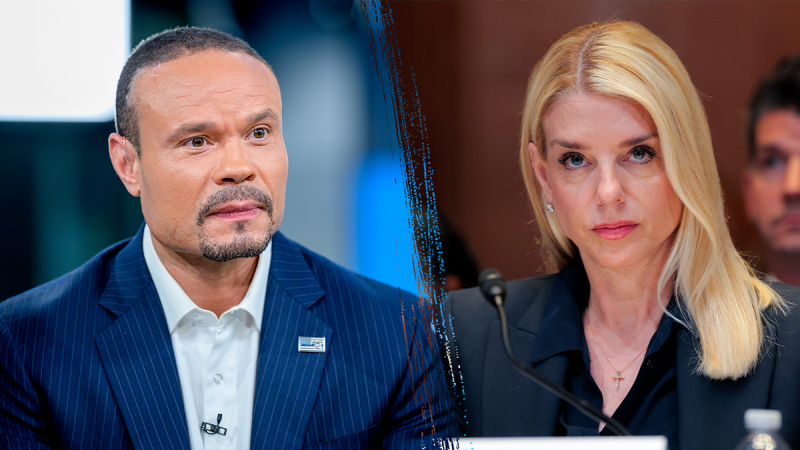
FBI Deputy Director Dan Bongino is leaving the bureau in January after speculation rose this week concerning his departure.
‘I will be leaving my position with the FBI in January,’ Bongino wrote in an X post Wednesday. ‘I want to thank President [Donald] Trump, AG [Pam] Bondi, and Director [Kash] Patel for the opportunity to serve with purpose. Most importantly, I want to thank you, my fellow Americans, for the privilege to serve you. God bless America, and all those who defend Her.’
President Donald Trump hinted at the news on the tarmac at Joint Base Andrews earlier in the afternoon, saying, ‘Dan did a great job. I think he wants to go back to his show.’
Bongino, a former Secret Service agent, had no FBI experience before Trump tapped him to serve in the No. 2 position there. Prior to Bongino, the role had for more than a century been filled by someone who worked at the bureau, according to the FBI Agents Association. The position does not require Senate confirmation.
Fox News confirmed Andrew Bailey, co-deputy director, has been on the job since September and will stay on for now in the deputy role reporting to Patel.
The White House and the FBI did not immediately respond to Fox News Digital’s requests for comment.
This is a breaking story. Check back later for updates.
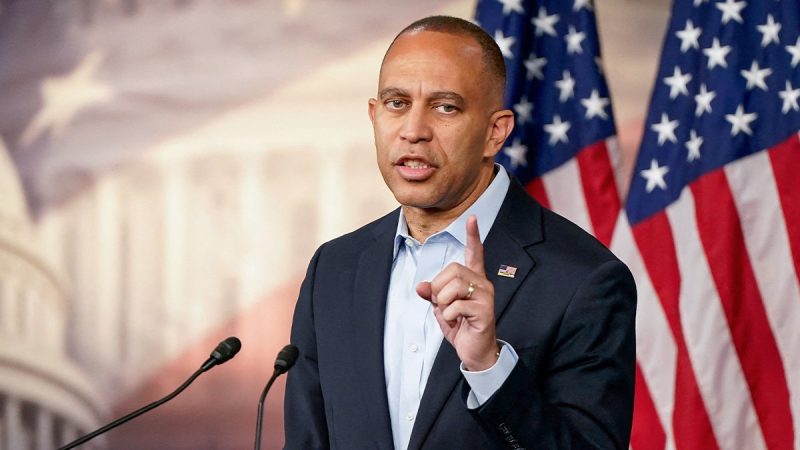
More than 200 House Democrats voted against a bill aimed at criminalizing transgender medical treatment for minors Wednesday evening.
The bill passed in a 216-211 vote that had some bipartisan crossover.
Three Democrats — Vicente Gonzalez, D-Texas; Don Davis, D-N.C.; and Henry Cuellar, D-Texas — voted with Republicans for the bill.
Four Republicans — Mike Kennedy, R-Utah; Brian Fitzpatrick, R-Pa.; Gabe Evans, R-Colo.; and Mike Lawler, R-N.Y., voted against it.
It was widely opposed by most Democrats, however. Forty-five House Republicans signed on to formally back the legislation before the vote.
And while the majority of Republicans supported it on the House floor, it’s unclear if it will be taken up in the GOP-led Senate.
Transgender issues, particularly related to minors, have been one of the topics driving a wedge between moderate and progressive Democrats. But the severity of the bill’s language appears to have turned off a significant number of Democrats in the House.
The bill creates new federal crimes that carry up to 10 years in prison for doctors performing transgender-affirming surgeries on minors, while also making it a crime to prescribe puberty blockers.
Parents or guardians of children under 18 could also be held criminally liable if they consent to or otherwise facilitate transgender treatment for them.
‘This extreme bill puts the threat of prosecution between hundreds of thousands of families and their doctors and would put doctors behind bars for exercising their best medical judgment,’ said Mike Zamore, national director of policy & government affairs at the American Civil Liberties Union
‘Passing this bill would be a grave escalation of an already severe effort to not only push transgender people out of public life but also allow the state to control our bodies and our lives further.’
Rep. Nancy Mace, R-S.C., who argued in favor of the bill on the House floor, said Wednesday, ‘It is obscene. It is disgusting. You’re seeing, in real time, Democrats wanting and defending grooming of children. And it is abhorrent.
‘There is a lie at the heart of the debate we’re having today that I have to correct. No child is born in the wrong body. There are only two sexes, male and female. There are no others.’
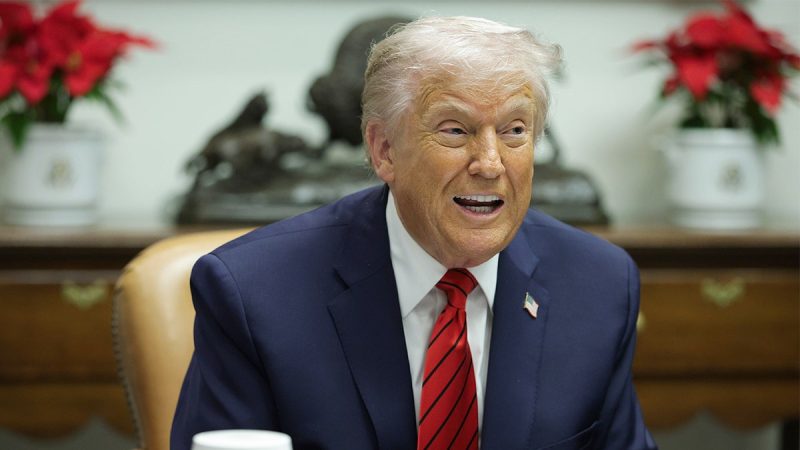
Senate Republicans inched closer to history Wednesday after blowing past yet another procedural obstacle on their way to confirming nearly 100 of President Donald Trump’s nominees.
As part of their mad dash from Washington ahead of the upcoming holiday recess, Senate Republicans advanced a tranche of 97 of Trump’s picks. The 53-47 party-line vote puts the GOP one step away from confirming the batch of nominees.
The final confirmation vote is expected Thursday, barring an agreement with Senate Democrats to speed up the process.
And if that vote is successful, which it is expected to be, Senate Republicans will have confirmed more of Trump’s picks than any other president in one year.
The current nominees package would place Trump at 415 total confirmed during the first year of his second term, which leapfrogs his total of 323 during his first term. It also blows past former President Joe Biden, who, at the same period at the end of his first year in office, had 365.
Senate Republicans have rapidly confirmed hundreds of Trump’s picks since changing the Senate’s rules for the confirmation process in September in a bid to smash through Senate Democrats’ blockade against advancing even the most low-level positions throughout the Trump administration.
The GOP went nuclear — the fourth time in the Senate’s history — to lower the threshold for certain picks to just a simple majority, rather than the typical, 60-vote filibuster.
That change has allowed Republicans to quickly move through sub-cabinet level positions at a brisk pace and to tee up Trump’s expected historic moment.
Among the list of nominees are former Rep. Anthony D’Esposito, R-N.Y., to serve as inspector general at the Department of Labor and two picks for the National Labor Relations Board, James Murphy and Scott Mayer, along with several others in nearly every federal agency.
Lawmakers also separately confirmed Trump’s choice to run NASA, billionaire Jared Isaacman, and his pick for a spot on the Nuclear Regulatory Commission, Douglas Weaver.
Isaacman’s confirmation sailed through on a bipartisan 67-30 vote but served as the second go-round for the upper chamber to ruminate on his ascension atop NASA.
Trump had nominated him to run the nation’s space agency in December 2024, but he was pulled earlier this year after a ‘thorough review of prior associations.’
But Isaacman was later nominated again in November for the same post, and Trump lauded his ‘passion for space, astronaut experience, and dedication to pushing the boundaries of exploration, unlocking the mysteries of the universe, and advancing the new space economy.’
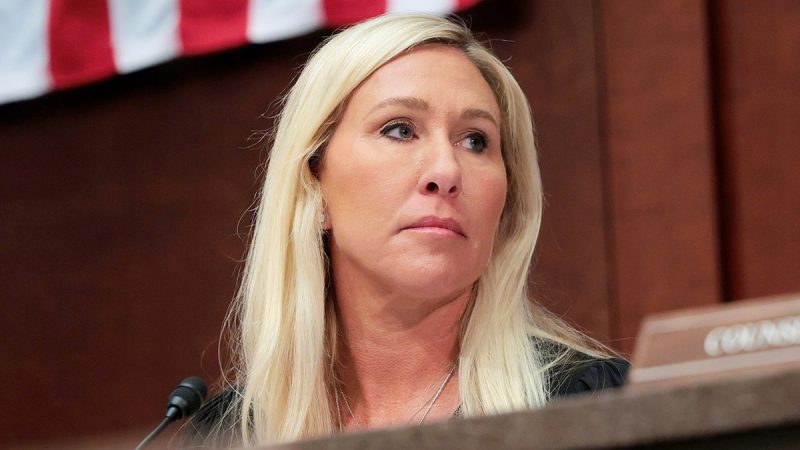
The House passed a bill on Wednesday that would criminalize gender transition treatment for minors.
The measure, sponsored by Rep. Marjorie Taylor Greene, R-Ga., passed by a 216-211 vote with some bipartisan support.
Reps. Henry Cuellar, D-Texas, Vicente Gonzalez, D-Texas, and Don Davis, D-N.C., voted with most Republicans for the bill, while Reps. Mike Lawler, R-N.Y., Brian Fitzpatrick, R-Pa., Gabe Evans, R-Colo., and Mike Kennedy, R-Utah, voted with most Democrats against the measure.
‘Children are NOT experiments. No more drugs. No more surgeries. No more permanent harm. We need to let kids grow up without manipulation from adults to make life-altering decisions! Congress must protect America’s children!!!’ Greene wrote on X ahead of the vote.
Greene had reached a deal with House leadership to bring her bill to the floor in exchange for her backing a rule last week to advance the National Defense Authorization Act.
The bill faces a significant hurdle to pass the Senate, as Republicans would need Democrat support to approve the legislation in the Upper Chamber.
The American Civil Liberties Union criticized the House passage, saying the measure ‘would have immediate and devastating effects on the lives and transgender youth and their families across the country.’
‘Politicians should never prohibit parents from doing what is best for their transgender children,’ Mike Zamore, National Director of Policy & Government Affairs at the ACLU, said in a statement. ‘These families often spend years considering how best to support their children, only to have ill-equipped politicians interfere by attempting to criminalize the health care that they, their children, and their doctors believe is necessary to allow their children to thrive.’
‘But this bill also creates an incredibly dangerous precedent far beyond the specific care at issue, criminalizing care based on ideology and placing Washington politicians between families and their doctors,’ he continued. ‘We strongly condemn the passage of this measure and urge members of the Senate to do everything in their power to prevent it from ever becoming law.’
Greene and Rep. Chip Roy, R-Texas, butted heads over the bill before its passage. The Georgia congresswoman, set to resign next month, had criticized Roy, who sits on the House Rules Committee, for introducing an amendment she argued would ‘gut the commerce clause.’
Roy’s amendment attempted to modify the bill to limit federal criminal liability under certain circumstances ‘by defining when prohibited conduct falls within federal jurisdiction,’ according to the Rules Committee.
But Greene contended that her bill ‘criminalizes ALL pediatric gender affirming care (transgender surgeries, puberty blockers, and hormones) NOT just those receiving federal funds and protects ALL children allowing them to grow up before they make permanent changes to their body that they can never undo!!!’
‘WTF is Chip Roy doing????? And this guy wants to be attorney general of Texas but refuses to protect children??!!!’ she wrote on X.
Roy responded that ‘the constitution matters & we should not bastardize it to use ‘interstate commerce’ to empower federal authorities.’
The Texas Republican, however, said in a statement on Wednesday that he would not offer the amendment ‘to avoid any confusion about how united Republicans are in protecting children from these grotesque procedures.’

The Senate confirmed billionaire private astronaut Jared Isaacman Wednesday in a 67-30 vote to serve as NASA administrator, months after President Donald Trump withdrew the same nomination during his public feud with Tesla and SpaceX CEO Elon Musk.
The confirmation places Isaacman, an investor in SpaceX and leader of two private spaceflight missions, at the helm of the nation’s space agency. Reuters reported that Isaacman becomes NASA’s 15th administrator and is known as an advocate of Mars missions.
Trump previously pulled Isaacman’s nomination in May, citing what he described at the time as ‘a thorough review of prior associations.’
Fox News Digital reported at the time that the decision was made amid escalating tensions between Trump and Musk, who had recently departed his role leading the Department of Government Efficiency (DOGE) and publicly criticized Trump’s ‘One Big, Beautiful Bill.’
Isaacman later suggested the timing of the withdrawal was no coincidence.
Speaking on the ‘All-In Podcast,’ he said, ‘I don’t need to play dumb on this. I don’t think that the timing was much of a coincidence.’ He added that ‘there were some people that had some axes to grind, I guess, and I was a good, visible target,’ Fox News Digital previously reported.
The nomination was revisited in the fall as relations between Trump and Musk appeared to thaw. In October, NASA officials confirmed Isaacman was again under consideration after meetings with Transportation Secretary Sean Duffy, who was tasked with vetting candidates for the permanent NASA role at Trump’s direction.
Trump formally renominated Isaacman in November, praising him in a social media post.
‘Jared’s passion for Space, and his commitment to American Leadership in Space, make him ideally suited to lead NASA into a bold new Era,’ Trump wrote.
Fox News Digital has extensively reported on the broader Trump-Musk feud that surrounded the nomination’s earlier withdrawal. In May and June, the two men publicly exchanged harsh words over Trump’s ‘One Big, Beautiful Bill.’
Musk accused Trump of pushing a ‘disgusting abomination,’ while Trump said Musk had gone ‘CRAZY’ and was ‘wearing thin.’
Signs of reconciliation followed when Trump and Musk shook hands and spoke briefly at Charlie Kirk’s memorial, with Trump later saying, ‘We had a little conversation. We had a very good relationship, but it was nice that he came over.’
Musk also attended a White House dinner hosted by Trump and appeared at other administration events.
Trump later teased Musk publicly, telling an audience, ‘You’re so lucky I’m with you, Elon. I’ll tell you. Has he ever thanked me properly?’
Musk responded on X by saying, ‘I would like to thank President Trump for all he has done for America and the world.’
Axios reported Tuesday that Musk has begun financially backing Republican House and Senate candidates ahead of the 2026 midterms, showing warming relations after what the outlet described as a ‘messy breakup’ earlier this year.
Politico similarly reported that Musk has said his relationship with Trump ‘went up in flames’ in June but has since been rebuilt.
Isaacman’s confirmation brings that arc to a close, cementing his leadership role at NASA.
Isaacman previously commanded Inspiration4, the first all-civilian mission to orbit Earth, and later led the Polaris Dawn mission, both in partnership with SpaceX.
The White House and representatives for Musk and Isaacman did not immediately respond to Fox News Digital’s requests for comment.

InMed Pharmaceuticals Inc. (NASDAQ: INM) (‘InMed’ or the ‘Company’), a pharmaceutical company focused on developing a pipeline of proprietary small molecule drug candidates for diseases with high unmet medical needs, today confirmed that, at its annual general and special meeting of shareholders held on December 17, 2025 (the ‘Meeting’), the matters put forward before shareholders for consideration and approval as set out in InMed’s notice of meeting and management information circular, dated November 3, 2025, were voted upon by the shareholders. A total of 993,491 common shares of the Company, representing approximately 35.43% of the Company’s 2,804,186 issued and outstanding common shares, were represented in person or by proxy at the Meeting.
Results of the vote for the election of the board of directors (the ‘Board‘) at the Meeting are set out as follows:
| Director | Votes For | Withheld Votes | ||
| Number | Percentage | Number | Percentage | |
| Eric A. Adams | 125,352 | 82.03% | 27,469 | 17.98% |
| Andrew Hull | 125,315 | 82.00% | 27,506 | 18.00% |
| Nicole Lemerond | 125,485 | 82.11% | 27,336 | 17.89% |
| Neil Klompas | 125,444 | 82.09% | 27,377 | 17.91% |
| John Bathery | 125,227 | 81.94% | 27,594 | 18.06% |
In addition, shareholders voted to approve CBIZ CPAs P.C. as the Company’s auditors for the following year.
Shareholders also voted to approve the potential issuance of 20% or more of the Company’s common shares issued and outstanding as of December 13, 2024, pursuant to the Standby Equity Purchase Agreement with YA II PN, Ltd., as amended on June 13, 2025, pursuant to Nasdaq Listing Rules 5635(d) and 5635(b) (the ‘SEPA‘).
InMed filed a report of voting results on SEDAR+ at www.sedarplus.ca on December 17, 2025.
About InMed:
InMed Pharmaceuticals is a pharmaceutical company focused on developing a pipeline of proprietary small molecule drug candidates targeting the CB1/CB2 receptors. InMed’s pipeline consists of three separate programs in the treatment of Alzheimer’s, ocular and dermatological indications. For more information, visit www.inmedpharma.com.
Investor Contact:
Colin Clancy
Vice President, Investor Relations
and Corporate Communications
T: +1 604 416 0999
E: ir@inmedpharma.com
Cautionary Note Regarding Forward-Looking Information:
This news release, and oral statements by the Company and its executive officers and directors, contain ‘forward-looking information’ and ‘forward-looking statements’ (collectively, ‘forward-looking information’) within the meaning of applicable securities laws. Forward-looking statements are frequently, but not always, identified by words such as ‘expects’, ‘anticipates’, ‘believes’, ‘intends’, ‘potential’, ‘possible’, ‘would’ and similar expressions. Such statements, based as they are on current expectations of management, inherently involve numerous risks, uncertainties and assumptions, known and unknown, many of which are beyond our control. Forward-looking information is based on management’s current expectations and beliefs and is subject to a number of risks and uncertainties that could cause actual results to differ materially from those described in the forward-looking statements. Without limiting the foregoing, forward-looking information includes, but is not limited to, statements about H.R. 5371, the ‘Continuing Appropriations, Agriculture, Legislative Branch, Military Construction and Veterans Affairs, and Extensions Act, 2026’ (the ‘Act‘), the impact of the Act on BayMedica Inc., any potential modifications to the Act and/or the timing thereof and the alternative options available to BayMedica and the Company, statements about developing a pipeline of proprietary small molecule drug candidates for diseases with high unmet medical needs, and statements about the potential issuance of common shares pursuant to the SEPA.
Additionally, there are known and unknown risk factors which could cause InMed’s actual results, performance, or achievements to be materially different from any future results, performance or achievements expressed or implied by the forward-looking information contained herein. A complete discussion of the risks and uncertainties facing InMed’s business is disclosed in InMed’s Annual Report on Form 10-K, and its Quarterly Reports on Form 10-Q, Current Reports on Form 8-K and any other documents filed or furnished with the Securities and Exchange Commission available on www.sec.gov.
All forward-looking information herein is qualified in its entirety by this cautionary statement, and InMed disclaims any obligation to revise or update any such forward-looking information or to publicly announce the result of any revisions to any of the forward-looking information contained herein to reflect future results, events or developments, except as required by law.
To view the source version of this press release, please visit https://www.newsfilecorp.com/release/278446
News Provided by Newsfile via QuoteMedia