Locksley Resources (LKY:AU) has announced Drill Program Operations Commence at El Campo
Download the PDF here.
This post appeared first on investingnews.com



Locksley Resources (LKY:AU) has announced Drill Program Operations Commence at El Campo
Download the PDF here.

Here’s a quick recap of the crypto landscape for Monday (November 24) as of 9:00 p.m. UTC.
Get the latest insights on Bitcoin, Ether and altcoins, along with a round-up of key cryptocurrency market news.
Bitcoin (BTC) was priced at US$89,102.53, up 1.9 percent in 24 hours.
The cryptocurrency is up after last week’s rout, which saw over US$1.2 billion in spot Bitcoin exchange-traded fund (ETF) outflows, marking the third consecutive week with over US$1 billion in outflows, as per SoSoValue.
Bitcoin price performance, November 24, 2025.
Chart via TradingView.
However, market sentiment remains cautious, with the Fear and Greed Index reading 12 at market close. Increased open interest and large short liquidations suggest potential volatility and possible rebound dynamics.
“In the short term, a rebound is highly likely, but if we fall again and lose the US$80,000 level, the probability of facing a much tougher period becomes significantly higher,” CryptoQuant said in a post on X.
Bitcoin’s relative strength index at 58.52 indicates moderately bullish momentum, but is still comfortably below overbought territory. A -0.005 funding rate shows traders are still somewhat bearish, although short liquidations may start to shift momentum upward. Economic data due later this week could lift markets higher if it reinforces expectations of an interest rate cut from the US Federal Reserve. Market odds for a December rate cut have risen recently, with many sources placing the probability at around 70 to 79 percent.
Meanwhile, ETH (ETH) was US$2,973.36, up by 5.1 percent in 24 hours. Liquidations of US$39.75 million, predominantly in short positions, may have fueled upward price pressure through a short squeeze.
Open interest rose 3.07 percent to US$35.93 billion, suggesting increasing trader engagement and speculative activity in Ether derivatives. A funding rate of zero reflects a balance between bullish and bearish sentiment among traders.
Recent events in the crypto ecosystem have underscored the vulnerabilities and institutional challenges facing DeFi investors. On November 21, Cardano experienced an accidental chain split triggered by a malformed transaction, temporarily dividing the blockchain into two competing chains.
The disruption exposed weaknesses in network resilience and stake pool operations, causing lost block rewards and transaction irregularities in DeFi protocols dependent on Cardano’s network stability.
Then, Etherscan unexpectedly cut off API access to roughly 10 percent of its blockchains and networks. This sudden outage occurred during the DevConnect conference, impairing developers’ ability to manage smart contracts effectively, further revealing how dependent DeFi investors are on the reliability of ancillary infrastructure.
These events came amid growing tensions involving JPMorgan Chase (NYSE:JPM).
The banking giant has drawn ire from the crypto community for reportedly influencing MSCI to exclude digital asset treasury companies holding more than 50 percent of their assets in cryptocurrencies.
JPMorgan’s research warns that the exclusion could trigger forced selloffs potentially totaling up to US$8.8 billion, with Strategy (NASDAQ:MSTR) alone possibly facing US$2.8 billion in outflows.
The final decision will be announced on January 15 ,with changes taking effect in February.
The bank then upgraded ratings on Monday for Bitcoin-mining companies Cipher Mining (NASDAQ:CIFR) and CleanSpark (NASDAQ:CLSK) to overweight from neutral, citing strong momentum in high-performance computing partnerships and long-term cloud and colocation deals that improve revenue visibility.
JPMorgan’s stance highlights the institutional and regulatory tensions complicating the interface between traditional finance and the fast-evolving crypto ecosystem.
The Franklin XRP ETF (ARCA:XRPZ) and the Grayscale XRP Trust ETF (ARCA:GXRP) both launched on Monday, providing new regulated investment options for XRP exposure.
Investor response was prompt, with early trading volumes indicating strong demand and positive sentiment around XRP’s future prospects as reflected in the market’s reception to both ETFs.
Market watchers see this dual launch as a major step toward integrating crypto assets like XRP into traditional finance frameworks, enhancing liquidity and investor confidence.
Ray Youssef, CEO of peer-to-peer crypto app NoOnes, said a wave of altcoin ETF launches could bring a much-needed dose of optimism back into the market if investors interpret new listings as implicit regulatory approval.
“As market sentiment has been so underwhelming in recent times, the ETF season hitting the market at its current condition may be when they can make the most significant contribution to the digital asset economy this year.”
Youssef added that the launch of altcoin ETFs is creating a steady flow of capital into the digital asset market, providing a liquidity buffer. This momentum could lead to an end-of-year rally for altcoins.
Michael Burry, best known for his prescient bet against the US housing market in 2008, has launched a paid Substack newsletter not long after closing his hedge fund, Scion Asset Management.
In his introductory post, Burry emphasizes that the move does not mark a retirement, but rather a shift toward writing without the regulatory constraints that accompany professional money management.
Priced at US$39 per month, the newsletter has quickly drawn more than 21,000 subscribers.
Early essays revisit his trading history during the dot-com era and outline why he views today’s artificial intelligence boom as a supply-glutted bubble primed for correction.
With Scion now closed, Burry says the newsletter will become his primary outlet for analysis as he continues to track what he views as speculative excess building across technology markets.
Securities Disclosure: I, Giann Liguid, hold no direct investment interest in any company mentioned in this article.
Securities Disclosure: I, Meagen Seatter, hold no direct investment interest in any company mentioned in this article.
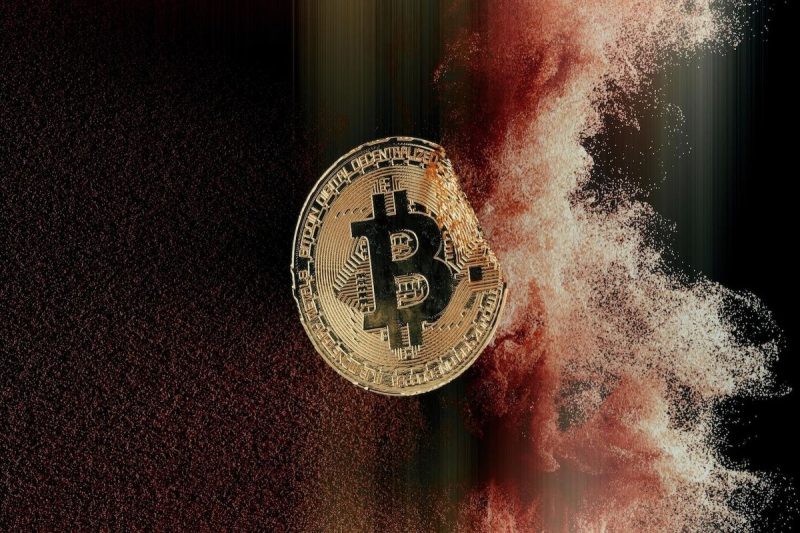
Here’s a quick recap of the crypto landscape for Wednesday (November 26) as of 9:00 p.m. UTC.
Get the latest insights on Bitcoin, Ether and altcoins, along with a round-up of key cryptocurrency market news.
Bitcoin’s (BTC) price climbed from around US$87K to close at US$89,903.49 on Wednesday afternoon, a three percent increase in 24 hours.
Bitcoin price performance, November 26, 2025.
Chart via TradingView.
However, a 1.55 percent increase in open interest during the same four hour window suggests fresh buying interest, while a positive funding rate of 0.002 reflects modestly bullish market sentiment. A relative strength index of 62.56 for Bitcoin indicates that the asset is in moderately bullish territory but not yet overbought.
Despite optimism of a possible temporary reset, investors warn that a decisive break below US$80,000 could expose Bitcoin to a slide toward the US$69,000 to US$62,000 support range.
As analyst Ted Pillows wrote on X, “$BTC is facing a lot of resistance around the $88,000–$90,000 zone. If BTC doesn’t break above this level soon, expect a sweep of the lows again.”
“Notably, what makes this episode different from past crypto winters is the investor base. BTC is now held by ordinary investors in their mainstream portfolios. So many are treating it like any other high-beta risk asset,’ she said.
“This behavior means that current price action is more of a classic de-risking phase. Rate-cut expectations change quickly, so investors opt for assets they perceive as core ballast. Given that, the picture suggests a complementary reading rather than a simple “either/or.” Gold acts as the insurance that central banks are still actively adding. In turn, Bitcoin is the high-risk component that investors reduce first when volatility rises,’ added Chen.
Meanwhile, Ether (ETH) closed at US$3,025.84, a 3.1 percent increase in 24 hours. ETH also showed strong bullish momentum, with a 2.7 percent rise in open interest and liquidations predominantly on the short side, signaling a short squeeze; however, a positive funding rate of 0.008 underscores traders’ optimism.
Strategy (NASDAQ:MSTR) reiterated that its balance sheet can withstand a deep Bitcoin drawdown, telling investors in a recent X post that its collateral coverage would remain at 2.0x even if Bitcoin dropped to US$25,000.
The company disclosed updated calculations showing that its convertible debt remains overcollateralized despite the stock’s 49 percent slide and the risk of an MSCI index removal next year.
With 649,870 BTC — worth roughly US$57 billion — the firm remains the largest corporate holder of Bitcoin globally. Strategy maintains that this overcollateralization gives it room to manage volatility and refinance maturities that run through 2032. Despite the reassurances, the company continues to face pressure from index committees and investors reevaluating the long-term role of a Bitcoin-heavy corporate treasury.
Recently, S&P Dow Jones Indices left Strategy off its latest round of S&P 500 additions, choosing to elevate SanDisk instead despite Strategy’s market capitalization placing it within the top tier of US public companies.
Strategy’s bid for inclusion has been complicated by its reliance on Bitcoin holdings, which some index members argue behaves more like an investment vehicle than a traditional operating company.
For its part, Strategy insists that its software business, alongside its Bitcoin strategy, qualifies it as an operating firm under the index rules. Chairman Michael Saylor pushed back against the characterization, stressing on X that Strategy is “not a fund, not a trust, and not a holding company.”
Japan’s Financial Services Agency has finalized plans to move digital assets under the Financial Instruments and Exchange Act, marking the country’s most sweeping crypto regulatory overhaul in years.
The shift reclassifies crypto assets as investment products and subjects issuers and exchanges to disclosure and conduct standards similar to those governing securities.
The changes affect over 13 million Japanese crypto accounts that collectively hold more than ¥5 trillion, prompting concerns from local exchanges about higher compliance burdens.
The FSA’s working group outlined new obligations, including clearer disclosure of token supply, governance structures, project risk assessments, and issuer responsibilities.
In addition, exchanges will also be required to maintain reserve funds to cover potential hacking incidents. Regulators plan to crack down on unregistered offshore platforms that continue marketing to Japanese users without approval.
The legislative package is expected to be submitted during the 2026 Diet session.
In a historic move, the government of Bolivia is preparing to integrate cryptocurrencies and stablecoins, according to an announcement from the country’s economic minister, Jose Gabriel Espinoza.
“You can’t control crypto globally, so you have to recognize it and use it to your advantage,” Espinoza reportedly said, according to Reuters. With stablecoins like USDT already being used for cross-border payments and as a hedge against the local currency’s depreciation, banks will soon be allowed to custody crypto, as well as offer crypto-based savings accounts, credit cards, and loans.
A Spanish parliamentary bloc has introduced new tax amendments that would significantly increase the burden on Bitcoin, Ether, and other non-financial-instrument crypto assets.
The proposal would shift gains from crypto into the general personal income tax base, which carries rates of up to 47 percent — far above the current 30 percent maximum applied to savings-based income.
Lawmakers also want corporate crypto gains taxed at 30 percent and are pushing for a nationwide “traffic light” risk label that would appear on trading platforms.
Tax specialists argue the reforms would be difficult to implement, with some calling the package legally unworkable and likely to generate administrative chaos. Investors are likewise already expressing concern after a recent case in which a trader was taxed 9 million euros on a transaction that produced no profit, highlighting flaws in current enforcement.
If enacted, analysts further warn that the new measures could accelerate capital flight from Spain’s retail crypto market.
Grayscale submitted a Form S-3 registration statement to the US Securities and Exchange Commission on Wednesday, signaling the firm’s intention to convert its fund tied to Zcash into a spot exchange-traded fund.
Securities Disclosure: I, Giann Liguid, hold no direct investment interest in any company mentioned in this article.
Securities Disclosure: I, Meagen Seatter, hold no direct investment interest in any company mentioned in this article.
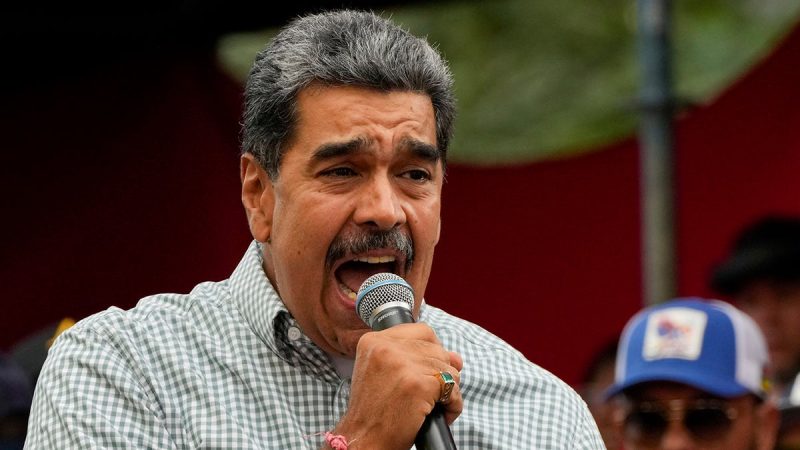
In one corner of the world, the U.S. is trying to end a war. In another, it may be preparing to start one.
While Washington pushes proposals aimed at easing Russia’s terms for a cease-fire with Ukraine in Europe, it’s taking a far tougher stance in the Western Hemisphere — moving to label Venezuela’s military-linked Cartel de los Soles a terrorist organization and quietly expanding its military footprint in the Caribbean.
Sporadic strikes on alleged cartel boats off Venezuela’s coast have grown into the largest U.S. military presence in Southern Command’s area in a generation, with the world’s biggest aircraft carrier, the USS Gerald R. Ford, steaming toward the Caribbean Sea. President Donald Trump has reportedly approved CIA covert measures inside Venezuela — operations that often precede military force — and U.S. planners have already drawn up target lists for cartel sites, according to The New York Times.
Many believe the U.S. could soon launch direct strikes on Venezuelan territory aimed at pushing Nicolás Maduro out of power.
At the same time, a top Russian commander, Colonel General Oleg Makarevich, has been reassigned from the Ukrainian front to head Russia’s Equator Task Force in Venezuela, overseeing roughly 120 troops training Venezuelan forces, Ukrainian intelligence chief Lt. Gen. Kyrylo Budanov told The War Zone. Fox News Digital has not independently verified Budanov’s claim.
Seth Krummrich, a retired U.S. Army colonel and vice president at Global Guardian, said Russian military advisers are indeed operating inside Venezuela but doubted Moscow would back Maduro militarily. ‘They’re there, full stop,’ Krummrich said. ‘But Russia needs to stop the massive blood-letting of its young men in Ukraine. They’re not going to go toe-to-toe with us militarily.’ He added that the relationship is long-standing: ‘There is a long history of Russian military advisers in Cuba and in Venezuela that goes on for decades.’
Many in Washington see a strategic payoff in forcing out Maduro: it would strip Russia of its last firm foothold in the Western Hemisphere — a loss comparable, in some analysts’ view, to Moscow’s waning influence in Syria. ‘Venezuela, for the longest time, has been a launch pad for Chinese, Russian, and Iranian influence in the Western Hemisphere,’ Krummrich said. ‘These chess pieces are all tied together when you arch your great-power competition.’
Other experts caution against assuming the U.S. escalation in Venezuela and its peace overtures in Europe are part of a single coordinated plan. Ryan Berg, director of the Americas Program at the Center for Strategic and International Studies (CSIS), spoke with Fox News Digital and said any overlap may be more coincidence than strategy.
‘We’ve been zigging and zagging in Venezuela,’ Berg said. ‘Trump has gone back and forth between build-ups and calls for dialogue, while the Russia timeline has only recently become parallel to these events. Anything that looks coordinated is likely coincidence.’
Berg recalled that during Trump’s first administration, some advisers floated an ‘Ukraine-for-Venezuela’ concept — asking Russia to relinquish its stake in Caracas in exchange for U.S. concessions in Eastern Europe — but the idea was quickly abandoned. ‘Russian power in Venezuela is important,’ Berg said, ‘but it’s not so overwhelming that it’s the reason Maduro survives.’
Russia’s footprint in Latin America has grown only modestly since the early 2000s, dwarfed by China’s economic expansion. Moscow’s closest partners remain Cuba, Venezuela, and Nicaragua. Beyond them, its influence is exercised mainly through media and selective economic pressure.
‘If you look at Russia’s trade profile with the region, it’s small,’ Berg said. ‘But Moscow is very good at using those few trade points for leverage.’
He cited examples: when Ecuador considered sending old Russian-made equipment to Ukraine in exchange for U.S. military aid, Russia threatened to block Ecuadorian banana exports — nearly $1 billion annually — by imposing new phytosanitary checks. The deal collapsed within a week.
Similarly, Moscow has kept Brazil and Argentina largely muted on the Ukraine invasion by leveraging its control over nitrate fertilizer exports, crucial to both agricultural giants. ‘They use whatever levers they have — bananas, fertilizer, spare parts — to coerce quietly,’ Berg said.
Russia also continues to service aging equipment across the region. ‘They sell a lot of kit here,’ Berg added. ‘Many countries still operate Russian-origin systems that need maintenance and parts. That creates dependency.’
If U.S. forces strike Venezuelan targets, most observers expect Russia to limit its response to intelligence sharing and disinformation, not combat support. ‘The Russians are pretty tied down in Ukraine,’ Berg said. ‘We saw during the 12-day war, when Iran appealed for help, Moscow stayed silent. They simply don’t have the capacity.’
Berg described a recent episode in which a sanctioned Ilyushin cargo plane landed in Caracas. Russian lawmakers briefly claimed it carried air-defense systems and technicians to assist Maduro, but Foreign Minister Sergei Lavrov later denied it. ‘He essentially said, ‘We have no mutual-defense treaty,’’ Berg noted. ‘That was widely read as: we’re not coming to Venezuela.’
John Hardie, deputy director of the Russia Program at the Foundation for Defense of Democracies, also spoke with Fox News Digital and said there is little evidence of a coordinated link between the U.S. buildup in the Caribbean and Washington’s peace overtures in Europe. ‘I don’t see any immediate connection,’ Hardie said. ‘Russia’s ability to influence events in Venezuela is pretty limited.’
He said Moscow’s power-projection capacity in the Western Hemisphere remains constrained. ‘They can take limited action — fly some bombers into the region, sail submarines to Cuba — but major operations in Latin America are beyond their capacity,’ Hardie said.
Hardie also noted reports of the Russian Ilyushin transport aircraft visiting Venezuela and suggestions it could have carried air-defense systems, but said any such transfer would have little strategic effect. ‘Even if Russia slipped in some air defenses, it wouldn’t make much difference,’ he said. ‘The Venezuelan military would still be heavily overmatched by the United States.’
Both Krummrich and Berg agree that momentum is building toward U.S. kinetic action. Berg said indications point to possible strikes between Thanksgiving and Christmas, as U.S. naval and intelligence assets align and Trump signals impatience with Maduro’s attempts to stall.
‘Maduro’s instinct is to buy time — that’s what’s kept him afloat through multiple administrations,’ Berg said. ‘But Trump wants results, not a two-year transition or vague promises about U.S. oil access. The question is what Maduro can offer that will actually satisfy him.’
Whether this two-track moment represents coincidence or coordination, the stakes are high. A peace framework in Europe could stabilize one front while a new flashpoint ignites closer to home — underscoring the paradox of Washington’s posture in late 2025: seeking de-escalation abroad while bracing for confrontation in its own hemisphere.
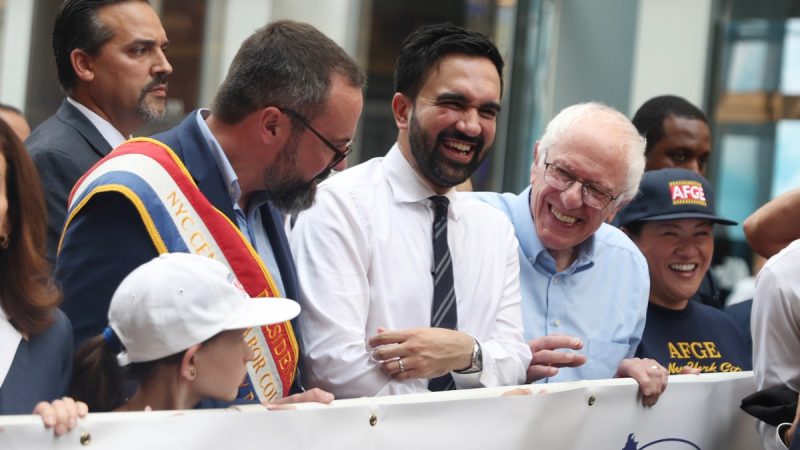
The far-left push within the Democratic Party, highlighted by mayoral victories by socialist candidates in New York City and Seattle, is poised to be a major factor in several key battleground House races as several candidates carrying the progressive mantle hold strong positions in Democratic primaries.
Several of the most competitive House races in the country feature candidates putting to the test whether progressive policies can appeal to voters outside deep blue urban centers, including in California’s 22nd Congressional District, where Democrat Randy Villegas is running to unseat Republican Rep. David Valadao.
‘Bernie and I share the same goal: to make life more affordable for working families,’ Villegas said in a statement after being endorsed by Sen. Bernie Sanders, I-Vt., a self-described ‘democratic socialist.’
‘He has dedicated his life to putting power in the hands of ordinary Americans instead of the ultra-rich, and I’m excited to work together to fight for our communities here in the Central Valley and across the country.’
In addition to being endorsed by Sanders, who endorsed New York City Mayor-elect Zohran Mamdani, Villegas has employed the Fight Agency advertising firm, among others, which is led by operatives who also helped Mamdani cruise to victory earlier this month.
Fox News Digital reported this week that Fight Agency is also working to defeat two vulnerable House Republicans in Pennsylvania, Reps. Rob Bresnahan and Ryan Mackenzie.
Villegas, endorsed by the progressive Working Families Party that endorsed Mamdani, is currently running in a Democratic primary against California state Assemblywoman Jasmeet Bains, who was recruited by the Democratic Congressional Campaign Committee (DCCC) and currently is sitting on less cash on hand than Villegas.
‘Here in the Central Valley, we couldn’t care less about political labels,’ Villegas said in a statement to Fox News Digital. ‘We care about being able to see a doctor without going bankrupt and being able to feed our families without needing a second job. We’re sick of politicians in both parties selling us out to billionaires and corporations. Any politician who isn’t fighting for working families like our lives depends on it needs to get out of the way.’
In Colorado’s 8th Congressional District, GOP Rep. Gabe Evans is being challenged by another progressive Democrat, Manny Rutinel, in what is expected to be one of the tightest House races next November.
Rutinel, who serves as a Colorado state representative, who was reportedly spotted alongside Mamdani and holds a large fundraising lead over his Democrat opponents, has associated himself with a variety of far-left groups and politicians, including Rep. Ilhan Omar, D-Minn., Townhall reported.
Rutinel has been endorsed by progressive groups like CHC Bold PAC and Latino Victory Fund.
The race to unseat GOP Rep. Darrell Issa in California’s redrawn 48th Congressional District features Democrat Ammar Campa-Najjar, who describes himself as a ‘working-class progressive’ and was endorsed by the Sanders-linked group Our Revolution.
Campa-Najjar, who volunteered for Sanders’ 2016 presidential campaign and appears to be the front-runner in the Democratic primary, was endorsed in 2020 by the Working Families Party as well as Democrat Rep. Alexandria Ocasio-Cortez’s Courage to Change PAC.
GOP Rep. Tom Barrett is up for re-election in Michigan’s 7th Congressional District, and one of the Democrats running to replace him is William Lawrence, who co-founded the progressive Sunrise Movement.
Lawrence’s policies have drawn comparisons to Mamdani, including from the Lansing City Pulse, who wrote that his ‘campaign is built on a community movement, a message of ‘real representation’ that takes ‘political control away from the establishment and puts it back in the hands of the people.’ It’s like how Zohran Mamdani won in New York City.’
Peter Chatzky is running as a Democrat challenging GOP Rep. Mike Lawler in New York’s 17th Congressional District, and although he is running in a crowded primary, he has the ability to self-fund and is viewed as a formidable contender in a district ranked by Cook Political Report as ‘Lean Republican.’
Chatzky has defended Mamdani’s agenda on social media and praised the young socialist for running ‘an effective campaign that consistently focused on affordability, fairness, and opportunity in New York City.’
Chatzky, the only Democrat in the field who has called for Senate Minority Leader Chuck Schumer to step down, has expressed support for ‘universal healthcare.’
Like Mamdani, Chatzky has also faced criticism for his positions on Israel and defended Mamdani against allegations of antisemitism.
In Nebraska, John Cavanaugh, a state senator, is running as a Democrat to replace retiring GOP Rep. Don Bacon in the 2nd Congressional District with the endorsement of the Congressional Progressive Caucus, which he said he is ‘grateful’ for and that he plans to join them on the ‘front lines.’
As Democratic leadership in Washington, D.C. begins to face calls for new faces, Republicans across the country have made the argument that the socialist push in recent months is reshaping key House races and changing the landscape of the way the Democratic Party operates going forward.
Mike Marinella, national spokesperson for the National Republican Congressional Committee (NRCC), told Fox News Digital the rise of progressive candidates is a ‘full-blown battle for the soul of the Democrat Party’ and concluded that the ‘socialist stampede is winning.’
‘Democrats aren’t focused on helping working families, they’re too busy tearing each other apart.’
In a statement to Fox News Digital, DCCC spokesperson Viet Shelton touted the Democrats across the country who are focusing on affordability.
‘Because of House Republicans, everything is too damn expensive and working families are struggling. Republican operatives in D.C. know they can’t win on the issues, so we’re seeing them melt down in real time,’ Shelton said.
‘Even President Trump is in the Oval Office desperately bear hugging the Mayor-elect. It’s embarrassing. While they waste their time, Democrats across the country are laser focused on lowering prices and fighting for everyday Americans, which is why we will re-take the majority.’
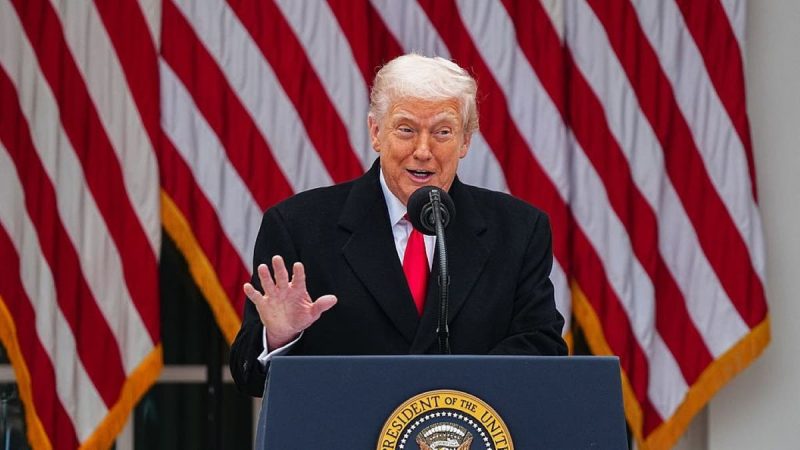
President Donald Trump pardoned a pair of turkeys at the White House on Tuesday, going on to joke that former President Joe Biden’s turkey pardons last year were ‘null and void’ because he used an autopen.
Trump made the joke while carrying out the decades-long White House Thanksgiving tradition, this year pardoning ‘Gobble’ and ‘Waddle.’ The crowd laughed as Trump said he saved last year’s turkeys, ‘Peach’ and ‘Blossom’ from being carved up after the nullification of Biden’s pardons.
‘I wanted to make an important announcement. Because you remember last year, after a thorough and very rigorous investigation by [Attorney General] Pam Bondi and all of the people at Department of Justice, the FBI, the CIA, and the White House Counsel’s Office…I have determined that last year’s turkey pardons are totally invalid,’ Trump said.
‘Null and void,’ Trump said of the pardons. ‘The turkeys known as Peach and Blossom last year have been located, and they were on their way to be processed, in other words, to be killed. But I’ve stopped that journey, and I am officially pardoning them. And they will not be served for Thanksgiving dinner. We saved them in the nick of time.’
This year’s turkeys, ‘Waddle’ and ‘Gobble,’ are the largest turkeys ever to receive a presidential pardon, Trump said. Both of the birds weigh over 50 pounds.
A National Turkey Federation spokeswoman told reporters at the White House that after Waddle and Gobble are pardoned, they will move to North Carolina State University, where they will serve as ‘Turkey ambassadors for our industry.’
First lady Melania Trump held a poll on X to name this year’s turkeys, resulting in Waddle and Gobble.
Last year’s pardoned turkeys, the aforementioned Peach and Blossom, and the ones before them, ‘Liberty’ and ‘Bell,’ all came from Minnesota.
North Carolina, Indiana, Iowa, South Dakota, Ohio, California, Virginia and Missouri have all sent turkeys to the White House.

A Florida man was arrested after an FBI investigation linked him to multiple extremist group chats on the encrypted messaging app Signal, where agents claim he used aliases to share disturbing graphic messages, detailed instructions for explosives and violent neo-Nazi propaganda.
Lucas Alexander Temple, 20, is facing federal charges for distribution of information regarding the manufacturing or use of explosives and possession of an unregistered short-barreled shotgun, according to court documents.
According to criminal complaints, Temple shared a hand-drawn diagram of a homemade detonator, linked to YouTube videos describing how to synthesize dynamite and construct blasting caps, and posted a 122-page extremist manual filled with White supremacist rhetoric.
Investigators said the chats also included graphic discussions promoting rape, torture and murder, including the killing of non-White children.
Screenshots of messages allegedly sent by Temple’s aliases included phrases like, ‘How long would it take to rape a femboy to death?’ and discussions about sexually assaulting men.
Temple’s online aliases were linked to his true identity through personal details shared in chats — including his age, job at a grocery store and a family museum visit — and were verified with state records and security footage, according to the complaint.
While executing a search warrant at Temple’s home on Thursday, FBI agents found neo-Nazi propaganda, a book related to Columbine High School shooters Dylan Klebold and Eric Harris and a Springfield Model 67 Series E shotgun with a barrel shorter than 18 inches.
The barrel was allegedly sawed off and found in a separate area by investigators.
ATF records confirmed Temple was not registered to have the weapon.
Agents also found a handwritten note that said, ‘Plans: Wear body cams for livestream. Notify friends of livestream. Put flags on car. Play music on car speakers during operation. Place motion-activated bombs in doorways (for cops).’
During his initial court appearance, Magistrate Judge Amanda Arnold Sansone ordered that he remain detained pending trial, finding he posed a serious danger to others.
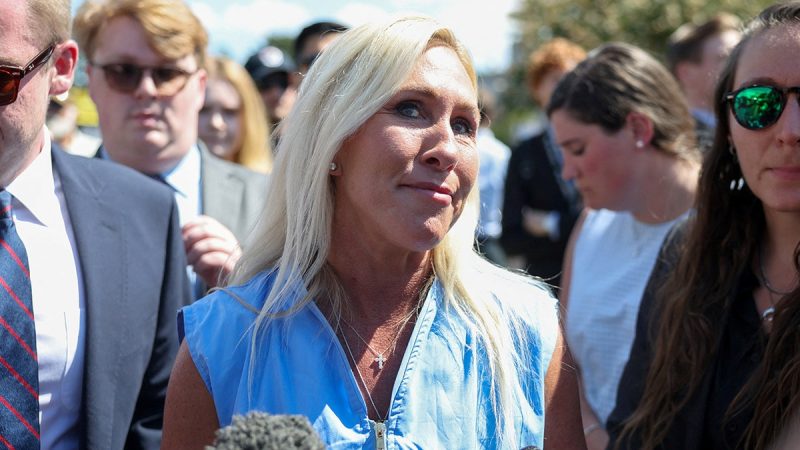
Rep. Marjorie Taylor Greene’s surprise resignation from Congress stunned House Republicans and sets up an even tighter majority in the lower chamber that could foil major legislative priorities.
Whether it triggers a ripple effect of Republican lawmakers following her lead remains to be seen. Still, there are members of the House GOP who are frustrated by how events have unfolded in recent months, especially after House Speaker Mike Johnson, R-La., opted to keep the House in session for over 50 days during the government shutdown.
Rep. Mike Haridopolos, R-Fla., told Fox News Digital he’s ‘heard rumors’ of frustration among his colleagues but, from people he’s spoken with, ‘They’re committed to being here.’
‘This is an incredible honor to serve in the House of Representatives, and when you run for office, I think you should fill out your term,’ Haridopolos said.
‘This is what the American public wanted,’ he continued. ‘I mean, they affirmatively put Republicans in power. And the only frustration we’ve been through, at least my biggest frustration, is when the Democrats exercise their power to shut the government down for 43 days.’
Greene, in her resignation letter teeing up her departure from Congress Jan. 5, 2026, aired grievances about how little progress has been made on Capitol Hill since she became a lawmaker in 2021.
She also took aim at President Donald Trump, who she has for weeks been distancing herself from despite being a die-hard Trump loyalist for much of her legislative career, and at Johnson for his handling of the shutdown.
‘During the longest shutdown in our nation’s history, I raged against my own speaker and my own party for refusing to proactively work diligently to pass a plan to save American healthcare and protect Americans from outrageous overpriced and unaffordable health insurance policies,’ Greene said. ‘The House should have been in session working every day to fix this disaster, but instead America was forced fed disgusting political drama once again from both sides of the aisle.’
Rep. Blake Moore, R-Utah, the fifth highest-ranking House Republican, sought to quash any rumors of dissent among the ranks in a statement to Fox News Digital.
‘Speaker Johnson and the House Republican leadership team have made a diligent effort to listen to all members of the conference for input, policy ideas and concerns,’ he said. ‘As usual, the media is building a negative narrative, but our record of delivering for the American people with our majority this year speaks to our teamwork and unity.’
That majority is now headed for a tenuous situation with Greene’s retirement.
Though Republicans are expected to maintain a seat after former Rep. Mark Green, R-Tenn., retired, the special election to replace the late former Rep. Sylvester Turner, D-Texas, is expected to stay in Democratic control, effectively nullifying the results.
That means when Greene leaves, and if the results in Tennessee in December favor Republicans, Democrats are hoping for a miracle in the race. The results in Texas in late January favor Democrats, so the GOP would be left with effectively a two-vote majority.
Another lawmaker was tempted to exit the House for a different reason.
Rep. Don Bacon, R-Neb., was furious over the White House’s 28-point plan for Russia and Ukraine and told Fox News Digital that he found it ‘so appalling, so embarrassing.’
Bacon argued that the plan, which has broadly been viewed as giving Moscow much of what it wants and leaves Ukraine with little other than an end to the ongoing war, was ‘a recipe for Ukraine being abused for decades to come, and to be basically a vassal state under Russian control. And that was unacceptable.’
His preference is that if Ukraine is pushed to give up territory to Russia, it should be allowed to join the North Atlantic Treaty Organization at the very least.
He noted that he ran on a pro-Ukraine platform, and, for a moment, considered resigning, fast-tracking his planned retirement from Congress at the end of next year.
‘I was so frustrated, it went through my mind,’ Bacon said. ‘You know, I don’t want to be a part of this team, frankly, but I don’t — I knew it was wrong. It was short-lived.
‘I think people would be doing a disservice to a lot of people just to resign,’ he continued. ‘I frankly think you should only resign if you got, like, an illness, or your spouse has an illness, or you got a legal issue. You know, when you run, there’s a commitment.’

This press release is issued pursuant to the requirements of National Instrument 62-103 – The Early Warning System and Related Take-Over Bid and Insider Reporting Issues
In accordance with the requirements of Section 3.1 of National Instrument 62-103 – The Early Warning System and Related Take-Over Bid and Insider Reporting Issues, Matthew J. Mason announces that, in connection with the closing of the Technology Licensing Agreement (the ‘Agreement’) with Stallion Uranium Corp. (TSXV: STUD,OTC:STLNF) (OTCQB: STLNF) (FSE: B76) (the ‘Issuer’), he has acquired 3,750,000 Common Shares of the Issuer at a deemed price of $0.12 per Common Share.
Immediately before the closing of the Agreement: (i) Mr. Mason held an aggregate of 20,825,000 Common Shares, representing approximately 17% of the Issuer’s issued and outstanding Common Shares on an undiluted basis; and (ii) assuming the exercise in full of all of the convertible securities of the Issuer held by Mr. Mason, being 15,137,500 Warrants to purchase an additional 15,137,500 Common Shares, Mr. Mason would have held an aggregate of 35,962,500 Common Shares, representing approximately 29% of the Issuer’s issued and outstanding Common Shares on a partially diluted basis.
Immediately after the closing of the Agreement: (i) Mr. Mason held an aggregate of 24,575,000 Common Shares, representing approximately 19% of the Issuer’s issued and outstanding Common Shares on an undiluted basis; and (ii) assuming the exercise in full of all of the convertible securities held by Mr. Mason, being 15,137,500 Warrants to purchase an additional 15,137,500 Common Shares, Mr. Mason would hold a total of 39,712,500 Common Shares, representing approximately 30% of the Issuer’s issued and outstanding Common Shares on a partially diluted basis.
Mr. Mason acquired such Common Shares for investment purposes and may, from time to time, acquire additional securities of the Issuer or dispose of such securities as he may deem appropriate, on the basis of his assessment of market conditions and in compliance with applicable securities regulatory requirements. A copy of the early warning report filed by Mr. Mason may be obtained on the Issuer’s SEDAR+ profile at www.sedarplus.ca.
For more information, please contact the Acquiror at 925 West Georgia Street, Vancouver, British Columbia V6C 3L2.
NOT FOR DISTRIBUTION TO UNITED STATES NEWSWIRE SERVICES OR FOR DISSEMINATION IN THE UNITED STATES
To view the source version of this press release, please visit https://www.newsfilecorp.com/release/275960
News Provided by Newsfile via QuoteMedia
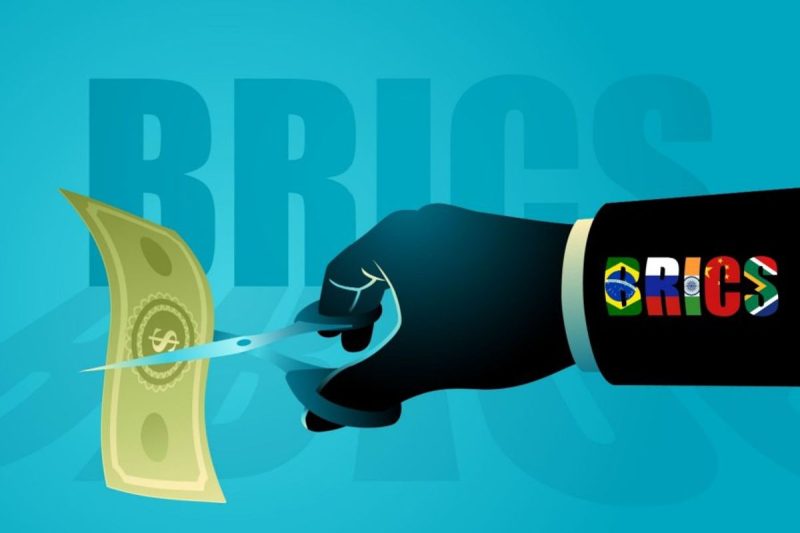
The BRICS nations, originally composed of Brazil, Russia, India, China and South Africa, have had many discussions about establishing a new reserve currency backed by a basket of their respective currencies.
The creation of a potentially gold-backed currency, known as the ‘Unit,’ as a US dollar alternative is also under consideration by BRICS members. However, whether or not these countries can fully separate themselves from the ruling global currency is up for debate even amongst themselves.
At the 2024 BRICS Summit, the movement away from US dollar supremacy really came to a head when Russian President Vladimir Putin appeared on stage holding what appeared as a prototype of a possible BRICS banknote.
However, he soon backed away from his previous aggressive calls for de-dollarization, stating the goal of the BRICS member nations is not to move away from the US dollar-dominated SWIFT platform, but rather to deter the ‘weaponization’ of the US dollar by developing alternative systems for using local currencies in financial transactions between BRICS countries and with trading partners.
‘We are not refusing, not fighting the dollar, but if they don’t let us work with it, what can we do? We then have to look for other alternatives, which is happening,’ Putin told listeners.
A potential BRICS currency would allow these nations to assert their economic independence while competing with the existing international financial system. The current system is dominated by the US dollar, which accounts for about 89 percent of all currency trading. Traditionally, nearly 100 percent of oil trading was conducted in US dollars; however, in 2023, one-fifth of oil trades were reportedly made using non-US dollar currencies.
Central to this situation is the US trade war with China, as well as US sanctions on China and Russia. Should the BRICS establish a new reserve currency, it would likely significantly impact the US dollar, potentially leading to a decline in demand, or what’s known as de-dollarization. In turn, this would have implications for the US and global economies.
If BRICS watchers were hoping for more fireworks at the 2025 BRICS meeting held in Brazil this July, they were sorely disappointed. Putin and Chinese President Xi Jinping were not in attendance, and talk of a BRICS currency was much more muted. On top of this, according to Modern Diplomacy, that topic may be even less of a concern at next year’s BRICS meeting; it will be held in India, which has sought to distance itself from a move away from the US dollar.
It’s still too hard to predict if and when a BRICS currency will be released, but it’s a good time to look at the potential for a BRICS currency and its possible implications for investors.
The BRICS nations have a slew of reasons for wanting to set up a new currency, including recent global financial challenges and aggressive US foreign policies. They want to better serve their own economic interests while reducing global dependence on the US dollar and the euro.
In recent years, the US has placed numerous sanctions on Russia and Iran. The two countries are working together to bring about a BRICS currency that would negate the economic impacts of such restrictions, as per Iranian Ambassador to Russia Kazem Jalal, speaking at a press conference during the Russia-Islamic World: KazanForum in May 2024.
Some experts believe that a BRICS currency is a flawed idea, as it would unite countries with very different economies. There are also concerns that non-Chinese members might increase their dependence on China’s yuan instead. That said, when Russia demanded in October 2023 that India pay for oil in yuan as Russia is struggling to use its excess supply of rupees, India refused to use anything other than the US dollar or rupees to pay.
There’s no definitive launch date as of yet, but the countries’ leaders have discussed the possibility at length.
During the 14th BRICS Summit, held in mid-2022, Russian President Vladimir Putin said the BRICS countries plan to issue a ‘new global reserve currency,’ and are ready to work openly with all fair trade partners.
In April 2023, Brazilian President Luiz Inacio Lula da Silva showed support for a BRICS currency, commenting, “Why can’t an institution like the BRICS bank have a currency to finance trade relations between Brazil and China, between Brazil and all the other BRICS countries? Who decided that the dollar was the (trade) currency after the end of gold parity?”
In the lead up to the 2023 BRICS Summit, there was speculation that an announcement of such a currency could be on the table. This proved to be wishful thinking, however. ‘The development of anything alternative is more a medium to long term ambition. There is no suggestion right now to creates a BRICS currency,’ Leslie Maasdorp, CFO of the New Development Bank, told Bloomberg at the time. The bank represents the BRICS bloc.
Government officials in Brazil, which took the rotating presidency of the BRICS group for 2025, have said there are no plans to take any significant steps toward a BRICS currency.
However, measures to reduce the reliance on the US dollar are very much on the table with cross-border payment systems, including exploring blockchain technology, a major theme at the 2025 BRICS summit, reported Reuters.
As mentioned, in 2026, the BRICS Summit will be held in India, which earlier this year distanced itself from the idea of a move away from the US dollar. Speaking at an event in London in March 2025, India’s External Affairs Minister S. Jaishankar stated, ‘I don’t think there’s any policy on our part to replace the dollar. The dollar as the reserve currency is the source of global economic stability, and right now what we want in the world is more economic stability, not less. I don’t think there’s a unified BRICS position on this. I think BRICS members, and now that we have more members, have very diverse positions on this matter.’
As of 2025, there are 10 BRICS member nations: Brazil, Russia, India, China, South Africa, Egypt, Ethiopia, Indonesia, Iran and the United Arab Emirates (UAE). This expanded group of 10 full member countries is sometimes referred to as BRICS+.
The group was originally composed of the four nations of Brazil, Russia, India and China and called BRIC, which changed to BRICS when South Africa joined in 2010.
At the 2023 BRICS Summit, six countries were invited to become BRICS members: Argentina, Egypt, Ethiopia, Iran, Saudi Arabia and the UAE. All countries but Argentina and Saudi Arabia officially joined the alliance in January 2024, and in 2025, Indonesia became the 10th full member of BRICS.
Additionally, at the 2024 BRICS Summit, 13 nations signed on as BRICS partner countries, although they are not yet full-fledged members: Algeria, Belarus, Bolivia, Cuba, Kazakhstan, Malaysia, Nigeria, Thailand, Turkey, Uganda, Vietnam and Uzbekistan.
Saudi Arabia has seemingly been on the fence about joining the BRICS. The Crown Prince Mohammed bin Salman’s November 19, 2025, announcement of a US$1 trillion investment in the US economy during a visit to the White House may signal something about the Middle Eastern country’s allegiance.
A new currency could have several benefits for the BRICS countries, including more efficient cross-border transactions and increased financial inclusion. By leveraging blockchain technology, digital currencies and smart contracts, the currency could revolutionize the global financial system. Thanks to seamless cross-border payments, it could also promote trade and economic integration among the BRICS nations and beyond.
A new BRICS currency would also:
Trump has not been shy about upping the ante on American protectionism with tariffs. During the first US presidential debate between him and Vice President Kamala Harris on September 10, 2024, Trump doubled down on his pledge to punish BRICS nations with strict tariffs if they seek to move away from the US dollar as the global currency.
He originally took a particularly strong stance against China, threatening to implement 60 percent to 100 percent tariffs on Chinese imports, although these hefty tariffs would be paid by American companies and consumers purchasing Chinese products, not by China itself.
In early December 2024, Trump posted an even more direct threat to BRICS nations on Truth Social:
“We require a commitment from these countries that they will neither create a new Brics currency nor back any other currency to replace the mighty US dollar or they will face 100% tariffs and should expect to say goodbye to selling into the wonderful US economy.’
In response to Trump demanding a ‘commitment’ from BRICS nations not to challenge the supremacy of the US dollar, Kremlin spokesperson Dmitry Peskov sounded less than threatened.
‘More and more countries are switching to the use of national currencies in their trade and foreign economic activities,’ Peskov said, per Reuters. ‘If the U.S. uses force, as they say economic force, to compel countries to use the dollar it will further strengthen the trend of switching to national currencies (in international trade).’
In July 2025, President Trump took it a step further by threatening to slap an extra 10 percent in tariffs on countries who side with BRICS policies, although this has not been implemented as of November 2025. ‘Any country aligning themselves with the Anti-American policies of BRICS, will be charged an ADDITIONAL 10% tariff. There will be no exceptions to this policy,’ he wrote in a social media post.
This additional BRICS targeted tariff has not yet been implemented as of November 2025.
If US President Donald Trump were to come through on his promise to enact 100 percent tariffs on BRICS nations the outcome could prove costly for all parties involved.
“The action would result in slower growth and higher inflation than otherwise in the US and most of the targeted economies,” according to analysis by the Peterson Institute for International Economics.
China would likely experience the worst slowing of its GDP growth as the US is its largest trading partner. One silver lining for China is that its disciplined central bank will help to save it from accelerated inflation.
While neither the 100 percent or 10 percent tariffs specifically targeting BRICS countries for their membership have been implemented, the countries still face many other tariffs from the US.
Trump’s blanket 50 percent tariffs on steel and aluminum imports, set on June 3, 2025, impact Brazil, China and the UAE. Brazil is a top three source for US steel imports, while China and the UAE are significant sources of US aluminum imports.
In late July, Brazil was also saddled with a 50 percent tariff on a broader range of goods, which US President Donald Trump inflicted on the nation in response to the trial of former President Jair Bolsonaro for his alleged coup attempt.
Trump’s tariffs could have a significant impact on Brazil’s economy, which is the largest in Latin America. However, most of the key trading sectors between the two nations are exempt from the tariff, including “civil aircraft, pig iron, precious metals, wood pulp, energy and fertilizers,” states Reuters.
India is another BRICS nation facing 50 percent tariffs. The sectors targeted span from textiles, garments and footwear to food, leather goods, gems and automobiles. Key industries such as pharmaceuticals and computer chips.
One of the major sticking points for the Trump administration is India continuing to purchase Russian oil. India and China are the two largest buyers of Russian oil, but the US has yet to punish China for purchasing oil from Russia.
Although China is the US’s biggest economic rival on the global stage, Trump hit the pause button on the escalating tariff war between the two nations until November 10, 2026.
In the meantime, the US’s 30 percent tariff on Chinese goods remains in place. Negotiations are underway, including on a proposed 245 percent tariff on Chinese electric vehicle imports.
In July, the Trump Administration imposed 30 percent tariffs on South Africa, the US’s second biggest trading partner. The African nation’s agriculture, mining and manufacturing sector are at significant risk from the tariffs, but there are exceptions in place for “copper, pharmaceuticals, semiconductors, some critical minerals, stainless steel scrap and energy products,” reports the BBC.
Brazilian President Luiz Inacio Lula da Silva convened an online BRICS summit on September 8, 2025, to address the threat of US trade policies and tariffs to member nations.
“Tariff blackmail is being normalized as an instrument to seize markets and interfere in domestic affairs,” stated Lula, according to a prepared statement from the Brazilian government.
“Our countries have become victims of unjustified and illegal trade practices.”
Both Lula and Jinping called upon their BRICS peers to stand together and push back against unfair trade practices, and strengthen trade and cooperation between member nations.
However, the South China Morning Post reports that summit attendees fell short of directly criticizing US President Donald Trump in a bid not to further stoke his ire. That may also be why most BRICS members are trying to negotiate with the US rather than fight back with retaliatory tariffs.
Critics have suggested Trump’s tariffs are having the undesirable effect of driving major trading partners like Brazil, India and South Africa further into the arms of US rivals China and Russia.
While currently only 9 percent of China’s exports are to other BRICS members, according to Reuters, trade between China and Russia reached a record US$244.8 billion in 2024.
In addition, China is Brazil’s largest trading partner, importing 70 percent of its soybeans from the Latin American country. In fact, 28 percent of Brazil’s total exports go to China and 24 percent of its imports are from China.
BRICS trade relations may strengthen as the bloc seeks to mitigate the economic impact of US tariffs.
RomanR / Shutterstock
For decades, the US dollar has enjoyed unparalleled dominance as the world’s leading reserve currency. According to the US Federal Reserve, between 1999 and 2019, the dollar was used in 96 percent of international trade invoicing in the Americas, 74 percent in the Asia-Pacific region and 79 percent in the rest of the world.
According to the Atlantic Council, as of November 2025 the US dollar is used in approximately 89 percent of currency exchanges, and 56 percent of all foreign currency reserves held by central banks. Due to its status as the most widely used currency for conversion and its use as a benchmark in the forex market, almost all central banks worldwide hold dollars.
Additionally, the dollar is used for the vast majority of oil trades.
Although the dollar’s reserve currency share has decreased as the euro and yen have gained popularity, the dollar is still the most widely used reserve currency, followed by the euro, the yen, the pound and the yuan.
The potential impact of a new BRICS currency on the US dollar remains uncertain, with experts debating its potential to challenge the dollar’s dominance. However, if a new BRICS currency was to stabilize against the dollar, it could weaken the power of US sanctions, leading to a further decline in the dollar’s value. It could also cause an economic crisis affecting American households. Aside from that, this new currency could accelerate the trend toward de-dollarization.
Nations worldwide are seeking alternatives to the US dollar, with examples being China and Russia trading in their own currencies, and countries like India, Kenya and Malaysia advocating for de-dollarization or signing agreements with other nations to trade in local currencies or alternative benchmarks.
While it is unclear whether a new BRICS currency would inspire the creation of other US dollar alternatives, the possibility of challenging the dollar’s dominance as a reserve currency remains.
And, as countries continue to diversify their reserve holdings, the US dollar could face increasing competition from emerging currencies, potentially altering the balance of power in global markets.
However, a study by the Atlantic Council’s GeoEconomics Center released in June 2024 shows that the US dollar is far from being dethroned as the world’s primary reserve currency. ‘The group’s ‘Dollar Dominance Monitor’ said the dollar continued to dominate foreign reserve holdings, trade invoicing, and currency transactions globally and its role as the primary global reserve currency was secure in the near and medium term,’ Reuters reported.
Warwick J. McKibbin and Marcus Noland of the Peterson Institute for International Economics agree with this sentiment, writing in their analysis of the impacts of US tariffs on BRICS nations that ‘the BRICS pose no serious threat to the dollar’s dominance.’
Ultimately, the impact of a new BRICS currency on the US dollar will depend on its adoption, its perceived stability and the extent to which it can offer a viable alternative to the dollar’s longstanding hegemony.
BRICS nations do not as of yet have their own specific digital currency, but a BRICS blockchain-based payment system is in the works, according to Kremlin aide Yury Ushakov in March 2024.
Known as the BRICS Bridge multi-sided payment platform, it would connect member states’ financial systems using payment gateways for settlements in central bank digital currencies. The planned system would serve as an alternative to the current international cross-border payment platform, the SWIFT system, which is dominated by US dollars.
“We believe that creating an independent BRICS payment system is an important goal for the future, which would be based on state-of-the-art tools such as digital technologies and blockchain,’ Ushakov said in an interview with Russian news agency TASS, emphasizing that it should be convenient, as well as cost effective and free of politics.
While development is underway, it has been a slow go and implementation isn’t likely before the end of the decade.
Another dollar-alternative digital currency cross-border payment system in the works is Project mBridge, which is under development via a collaboration between the Hong Kong Monetary Authority, the Bank of Thailand, the Digital Currency Institute of the People’s Bank of China and the Central Bank of the UAE. Saudi Arabia joined the project in 2024.
The central bank digital currencies traded on the platform would be backed by gold and local currencies minted in member nations.
In June 2024, Forbes reported that the mBridge platform had reached a significant milestone by completing its minimal viable product stage (MVP).
‘The MVP platform can undertake real-value transactions (subject to jurisdictional preparedness) and is compatible with the Ethereum Virtual Machine (EVM), a decentralized virtual environment that executes code consistently and securely across all Ethereum nodes,’ the publication stated. ‘MVP thus is suitable as a testbed for new use cases and interoperability with other platforms.’
Watch the full interview with Andy Schectman.
‘(New Development Bank President Dilma Rousseff) came out and publicly said that there has been an agreement in principle to use a new settlement currency called the Unit, which will be backed 40 percent by gold and 60 percent by the local currencies in the BRICS union — the BRICS+ countries. That gold will be in the form of kilo bars and will be deliverable or redeemable for those entities,’ Schectman said.
‘The basket of gold and the basket of currencies will be minted in the member countries … it will be put into an escrow account, taken off the ledger so to speak — off of their balance sheet and put onto the mBridge ledger, and held in an escrow account in their own borders. It doesn’t need to be sent to a central authority.’
A potential shift toward a new BRICS currency could have significant implications for the North American economy and investors operating within it. Some of the most affected sectors and industries would include:
A new BRICS currency would also introduce new trading pairs, alter currency correlations and increase market volatility, requiring investors to adapt their strategies accordingly.
Adjusting a portfolio in response to emerging BRICS currency trends may be a challenge for investors. While it does not currently seem like a BRICS currency is on the immediate horizon, Trump’s aggressive trade tactics have pushed allies away from the US, making diversification important.
Several strategies can be adopted to capitalize on these trends and diversify your portfolio:
Prudent investors will also weigh these strategies against their exposure to market, political and currency fluctuations.
In terms of investment vehicles, investors could consider ETFs such as the iShares MSCI BIC ETF (ARCA:BKF) or the Pacer Emerging Markets Cash Cows 100 ETF (NASDAQ:ECOW). They could also invest in mutual funds such as the T. Rowe Price Emerging Markets Equity Fund, or in individual companies within the BRICS countries.
Simply put, preparing for a new BRICS currency or potential de-dollarization requires careful research and due diligence by investors. Diversifying currency exposure, and investing in commodities, equity markets or alternative investments are possible options to consider while being mindful of the associated risks.
While it is not certain whether the creation of a BRICS reserve currency will come to pass, its emergence would pose significant implications for the global economy and potentially challenge the US dollar’s dominance as the primary reserve currency. This development would present unique investment opportunities, while introducing risks to existing investments as the shifting landscape alters monetary policy and exacerbates geopolitical tensions.
For those reasons, investors should closely monitor the progress of a possible BRICS currency. And, if the bloc does eventually create one, it will be important watch the currency’s impact on BRICS member economies and the broader global market. Staying vigilant will help investors to capitalize on growth prospects and hedge against potential risks.
Some financial analysts point to the creation of the euro in 1999 as proof that a BRICS currency may be possible. However, this would require years of preparation, the establishment of a new central bank and an agreement between the five nations to phase out their own sovereign currencies; it would most likely also need the support of the International Monetary Fund to be successful internationally.
The impact of its war on Ukraine will continue to weaken Russia’s economy and the value of the ruble, and China is intent on raising the power of the yuan internationally. There is also a wide chasm of economic disparity between China and other BRICS nations. These are no small obstacles to overcome.
Additionally, speaking at the New Orleans Investment Conference 2023, well-known author Jim Rickards gave a detailed talk on how a gold-backed BRICS currency could work. He suggested that if a BRICS currency unit is worth 1 ounce of gold and the gold price goes to US$3,000 per ounce, the BRICS currency unit would be worth US$3,000, while the dollar would lose value compared to the BRICS currency as measured by the weight of gold.
Importantly though, he doesn’t see this as a new gold standard, or the end of the US dollar or the euro.
“(With) a real gold standard, you can take the currency and go to any one of the central banks and get some gold,” Rickards said at the event. “With BRICS they don’t have to own any gold, they don’t have to buy any gold, they don’t have to prop up the price. They can just rise on the dollar gold market.’
The combined central bank gold holdings of the original BRICS nations plus Egypt (the only nation of the five new additions to have central bank gold reserves) accounts for more than 20 percent of all the gold held in the world’s central banks. Russia, India and China rank in the top 10 for central bank gold holdings.
Russia controls 2,329.63 metric tons (MT) of the yellow metal, making it the fifth largest for central bank gold reserves. China follows in the sixth spot with 2,303.51 MT of gold and India places eighth with 880.18 MT. Brazil and South Africa’s central bank gold holdings are much smaller, coming in at 145.14 MT and 125.47 MT, respectively. New BRICS member Egypt’s gold holdings are equally small, at 128.82 MT.
Securities Disclosure: I, Melissa Pistilli, hold no direct investment interest in any company mentioned in this article.