Blackstone Minerals (BSX:AU) has announced Update – Blackstone Merger to Acquire Copper Gold Project
Download the PDF here.
Blackstone Minerals (BSX:AU) has announced Update – Blackstone Merger to Acquire Copper Gold Project
Download the PDF here.
Joe Cavatoni, senior market strategist, Americas, at the World Gold Council, discusses the organization’s latest report on gold demand trends, highlight key data points from Q1.
He also shares his thoughts on gold’s record-setting rise, saying fundamentals remain strong.
Securities Disclosure: I, Charlotte McLeod, hold no direct investment interest in any company mentioned in this article.
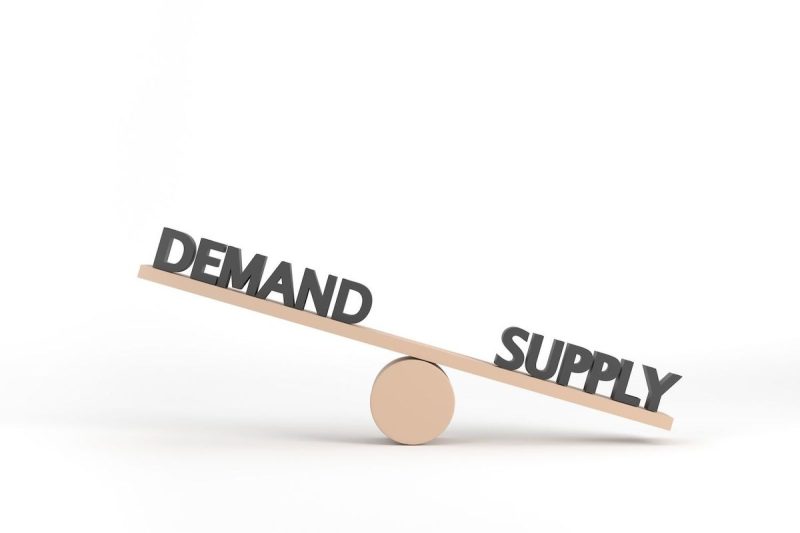
Copper prices are being pushed skyward as China’s stockpiles sit on the verge of depletion and as US demand for the red metal surges, fueled by looming trade restrictions under the Trump administration.
According to Mercuria, the market is undergoing “one of the greatest tightening shocks” in its history.
“At the current pace of draws, those Chinese inventories could deplete (to zero) by the middle of June,” Nicholas Snowdon, head of metals and mining research at the commodities trading house, told the Financial Times.
“Beijing had a razor-thin inventory buffer” to meet its soaring domestic demand, he added.
Copper inventories held in Chinese warehouses fell by a record 55,000 metric tons last week alone, sinking to just 116,800 metric tons. The sudden drawdown has placed further stress on a market that is already being strained by geopolitical tensions and a shift in long-term demand driven by clean energy initiatives and electrification.
The copper squeeze is being exacerbated by US buyers rushing to secure supply ahead of potential new tariffs.
US President Donald Trump has signaled that his administration is investigating “dumping and state-sponsored overproduction” of copper, echoing the rationale used for the imposition of 25 percent levies on steel and aluminum.
Copper futures prices on the Comex in New York have soared, rising 16.35 percent year-to-date to trade for US$4.69 per pound. The rally has been further buoyed by signs that China’s Ministry of Commerce is open to trade talks with the US — it has reportedly “taken note” of Washington’s signals and is evaluating the possibility of engagement.
As a result, inventories in Comex warehouses have surged to their highest levels since 2018.
The copper crunch is not confined to refined metal.
Analysts warn that Chinese access to copper scrap — a vital feedstock for its smelting industry — is also under threat from retaliatory trade measures and possible US export controls.
China relies heavily on imported scrap, and the US remains a key supplier. In 2024, the US exported 960,000 metric tons of copper scrap, nearly half of which went to China, according to data from Fastmarkets.
This year, exports are already trending lower: 142,000 metric tons were shipped in January and February, down from 149,000 metric tons in the same period last year. If the US imposes a ban on scrap exports or China imposes retaliatory import duties, the shortage in Asia’s largest economy could become even more acute.
Beyond short-term trade politics, copper is at the heart of a deeper structural transformation.
As the global economy pivots toward electrification and decarbonization, demand for the base metal is set to soar — despite advances in material efficiency and substitution.
During a recent webinar, Michael J. Finch, head of strategic initiatives at commodities price and data firm Benchmark Mineral Intelligence, noted that the accelerating deployment of electric vehicles (EVs), EV charging infrastructure and renewable energy sources is rapidly driving up copper intensity across energy systems.
“What … we can’t forget is, what are the requirements on the grid network? What are the requirements on power generation because of EVs, because of the charging infrastructure?” Finch said. He emphasized to attendees that while copper usage per EV has declined from around 100 kilograms in 2015 to about 68 to 70 kilograms today due to design optimizations and thrifting, total copper demand from the EV sector is still expected to rise sharply.
“We’re still looking at a market here … (of) over 5 million tonnes by 2040,” he said.
“That’s going to need a lot of charging infrastructure. That’s going to need a lot of grid upgrades. That’s going to need a lot of renewable power to be put in place,’ Finch added.
The overlapping dynamics of geopolitical uncertainty, rising protectionism and shifting energy priorities have created a volatile cocktail that could reshape global copper trade flows.
Efforts are underway in the US to take advantage of this shift. European copper producer Aurubis is investing 740 million euros in a new recycling facility in Richmond, Georgia, aimed at bolstering domestic supply. The plant, which is expected to be operational by the end of the fiscal year, will rely primarily on scrap sourced within the US.
Meanwhile, analysts are watching closely to see if the US and China can defuse trade tensions before they further destabilize a market that is already stretched thin.
Securities Disclosure: I, Giann Liguid, hold no direct investment interest in any company mentioned in this article.

The global pharmaceutical market reached a total value of US$1.38 trillion in 2024, according to Research and Markets, up significantly from the US$888 billion seen just over a decade earlier in 2010.
Experienced and novice investors alike may want to consider pharmaceutical exchange-traded funds (ETFs) as a way to gain exposure to the top pharma companies. Like all ETFs, pharmaceutical ETFs are a good option for those who want to trade a set of assets in the pharmaceutical industry instead of focusing solely on individual pharmaceutical stocks.
The main advantage of a pharmaceutical ETF is the fact that it can provide exposure to an overarching sector, but still trades like a stock. Pharma ETFs also offer less market volatility and lower fees and expenses.
Many of these funds have diverse holdings across some of the most important sectors in the pharmaceutical industry, including pain therapeutics, oncology, vaccines and biotechnology. Data was gathered on May 6, 2025.
Total assets under management: US$653.61 million
Established in late 2011, the VanEck Pharmaceutical ETF tracks the MVIS US Listed Pharmaceutical 25 Index. It has the capacity to provide big returns, even though there are some risks attached to the ETF. An analyst report indicates that investors looking for ‘tactical exposure’ to the pharma sector might consider this ETF as an investment option.
The ETF has 25 holdings, with the top five being Eli Lilly (NYSE:LLY) at a weight of 12.17 percent, AbbVie (NYSE:ABBV) at 6.48 percent, Johnson & Johnson (NYSE:JNJ) at 6.45 percent, Novartis (NYSE:NVS) at 5.43 percent and Cencora (NYSE:COR) at 5.34 percent.
Total assets under management: US$571.51 million
Created on May 5, 2006, this iShares ETF tracks some of the top US pharma companies. In total, the iShares US Pharmaceuticals ETF has 41 holdings, with the vast majority being large-cap stocks.
Of its holdings, Eli Lilly and Johnson & Johnson are by far the largest portions in its portfolio, coming in at weightings of 24.55 percent and 23.38 percent, respectively. The next highest are Royalty Pharma (NASDAQ:RPRX) at 4.93 percent, Zoetis (NYSE:ZTS) at 4.80 percent and Viatris (NASDAQ:VTRS) at 4.57 percent.
Total assets under management: US$240.1 million
The Invesco Pharmaceuticals ETF is primarily focused on providing exposure to US-based pharma companies. An analyst report states that this ETF chooses individual securities based on certain investment criteria, namely stock valuation and risk factors. Invesco changed the fund’s name from the Invesco Dynamic Pharmaceuticals ETF in August 2023.
This ETF was started on June 23, 2005, and currently tracks 31 companies. Its top holdings are Abbott Laboratories (NYSE:ABT) with a weight of 5.2 percent, AbbVie at 5.17 percent, Johnson & Johnson at 5 percent, Gilead Sciences (NASDAQ:GILD) at 4.94 percent and Eli Lilly at 4.86 percent.
Total assets under management: US$139.14 million
The SPDR S&P Pharmaceuticals ETF came into the market on June 19, 2006, and represents the pharmaceutical sub-industry sector of the S&P Total Markets Index. An analyst report for the ETF suggests that due to its narrow focus — which includes pharma giants that post ‘big returns’ during times of consolidation — it should not be considered for a long-term portfolio.
This pharma ETF tracks 43 holdings, with relatively close weighting among its holdings. XPH’s top five holdings are Corcept Therapeutics (NASDAQ:CORT) with a weight of 5.26 percent, Eli Lilly at 3.99 percent, Royalty Pharma (NASDAQ:RPRX) at 3.98 percent, Zoetis at 3.87 percent and Johnson & Johnson at 3.81 percent.
Total assets under management: US$82.86 million
The KraneShares MSCI All China Health Care Index ETF was launched in February 2018 and tracks an index of large- and mid-cap Chinese stocks in the healthcare sector, all weighted by market capitalization. According to an analyst report, the fund provides investors with ‘exposure to a relatively small slice of the Chinese economy.’
The ETF tracks 46 holdings, and its top five are Jiangsu Hengrui Medicine (SHA:600276) at 8.33 percent, BeiGene (OTC Pink:BEIGF,HKEX:6160) at 7.88 percent, Shenzhen Mindray Bio-Medical Electronics (SZSE:300760) at 6.79 percent, Wuxi Biologics (OTC Pink:WXIBF,HKEX:2269) at 6.67 percent and Innovent Biologics (OTC Pink:IVBXF,HKEX:1801) at 5.51 percent .
Securities Disclosure: I, Melissa Pistilli, hold no investment interest in any of the companies mentioned in this article.
White Cliff Minerals Limited (“WCN” or the “Company”) (ASX: WCN; OTCQB: WCMLF) is pleased to announce further assay results from the reverse circulation drilling campaign at the Company’s 100% owned Rae Copper Project in Nunavut, Canada.
“DAN25008 was prioritised for assay due to the abundance of visual sulphides observed during drilling, and these results have underpinned our confidence in those visuals prevalent in the Company’s prior work. We believe this drill hole ranks among the most significant copper intersections globally within the last 50 years and comfortably sits within the top 10 globally reported “grade-metre” copper results.
This discovery and outstanding results from Danvers is a clear testament to our technical team’s expertise and geological understanding, in particular the professionalism and persistence of Olga Solovieva and Sam Vaughan.
Our improved geological understanding of the Danvers area indicates a mineralised system that extends from surface over more than 175m vertically and potentially 7km in strike length – both to the northeast and southwest, providing scope for further high-impact intercepts from upcoming drilling. With our work updating the geological understanding at Danvers, we adapted our drill targets and DAN25008 resulted in mineralisation at least 30 metres below historical limits, with the hole terminating in high-grade copper mineralisation – suggesting considerable additional potential at depth. The increase in grade toward the bottom of the hole is encouraging and is validation of our methodology.
To illustrate the magnitude of this result, the DAN25001 intercept of 52m at 1.2% Cu – a strong result in its own right – now appears modest when viewed alongside the 175m @ 2.5% Cu from DAN25008. In the context of global copper supply constraints, the Company is well positioned to leverage these results with mineralisation from surface, supporting potential open pit mining activities and an open water port less than 80km from the deposit.
Troy Whittaker – Managing Director
FURTHER INFORMATION
Drillhole DAN25008 is an important step in the development of the Danvers copper deposit. An intercept of 175.26m at 2.5% copper is an outstanding result illustrating the continuous mineralisation which commences just below surface at 7.62m downhole. The final 30m of DAN25008 which averages 2.37% Cu and 10.51g/t Ag exists below the trace of historic drilling, effectively extending the known high-grade mineralisation.
Click here for the full ASX Release
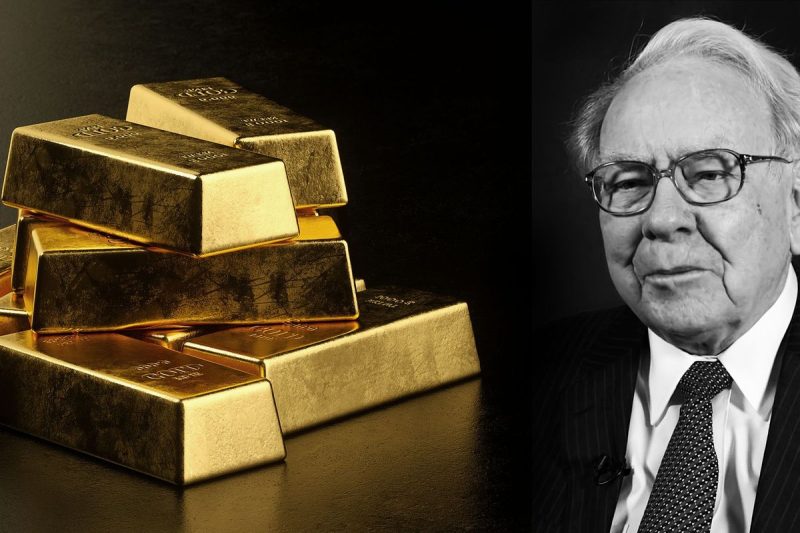
Warren Buffett has a formidable reputation as an investor — with a net worth of US$160 billion in May 2025, he’s among the world’s richest people and a business role model for many.
Buffett, who run his company Berkshire Hathaway (NYSE:BRK.A,NYSE:BRK.B) for over 60 years, made waves when he announced in May 2025 that he would be stepping down as CEO at the end of the year, although he will stay on as chairman.
Buffet is also well known for being uninterested in gold. For those wondering Buffett invests in gold, he has made his stance on the yellow metal abundantly clear over the years, and it’s not positive — put simply, he doesn’t think gold fits in with his strategy of value investing, which involves picking stocks that are trading for less than they are worth.
Given Buffett’s aversion to gold, market watchers were understandably surprised when Berkshire Hathaway invested in Barrick Gold (TSX:ABX,NYSE:GOLD) in Q2 2020, paying around US$560 million for about 21 million shares of the major gold miner.
What was behind that decision? Many headlines proclaimed that Buffett had changed his mind on gold. But there were plenty of counterpoints — some suggested that it could have been another person at Berkshire that made the trade and not Buffett himself; others pointed out that there’s a difference between investing in gold and investing in a gold-mining company. Still others noted that Berkshire’s stake in Barrick was relatively small compared to its other holdings.
Ultimately, Buffett and Berkshire’s position in Barrick turned out to be a short one. Berkshire Hathaway exited only two quarters later, which was just long enough to reap the rewards of gold’s big bump from the COVID-19 crisis. Perhaps the Oracle of Omaha was clued in to the precious metal’s status as a safe-haven asset in times of economic uncertainty.
Whatever the reason for the moves at Berkshire, it’s interesting to look back at some of the comments Warren Buffett has made about gold. While he hasn’t spent a huge amount of time discussing gold (after all, he doesn’t like it), he’s spoken enough about it that there’s no mistaking his stance. Here’s a look at three quotes that sum up what Warren Buffett thinks about gold.
“Gold … has two significant shortcomings, being neither of much use nor procreative. True, gold has some industrial and decorative utility, but the demand for these purposes is both limited and incapable of soaking up new production. Meanwhile, if you own one ounce of gold for an eternity, you will still own one ounce at its end”
— Warren Buffett, letter to shareholders, 2011
Warren Buffett’s 2011 letter to shareholders includes a fairly lengthy discussion on gold, which hit what was then an all-time high of around US$1,920 per ounce in September of that year.
In the letter, Buffett lays out three types of investments, placing gold squarely in the second category, which involves “assets that will never produce anything.” Buyers purchase these assets, according to Buffett, with the hope that someone else will pay more for them in the future. “Owners are not inspired by what the asset itself can produce — it will remain lifeless forever — but rather by the belief that others will desire it even more avidly in the future,” he states in the letter.
Gold advocates reacted strongly to those comments, arguing that the point of gold isn’t what it can produce; instead, its value comes from the fact that it’s a source of protection in times of crisis.
Others have pointed out that gold does in fact have a good track record of producing returns. Responding specifically to Buffett’s comment that an ounce of gold will always only be an ounce of gold, Frank Holmes, chief investment officer at U.S. Global Investors (NASDAQ:GROW), said that the Oracle of Omaha is simply wrong about the yellow metal.
“Buffett’s always been negative on gold; his own company doesn’t pay a dividend, and his argument before was (that) gold doesn’t pay income,” Holmes said. “He’s totally wrong. Since 2000, bullion has far outperformed the S&P 500 (INDEXSP:.INX) by two to one, and it’s outperformed Berkshire Hathaway.”
“I have no views as to where (gold) will be (in the next five years), but the one thing I can tell you is it won’t do anything between now and then except look at you” — Buffett, CNBC’s Squawk Box, 2009
Most of the other things Buffett has said about gold relate to the two failings he mentions in his 2011 letter to shareholders: the metal’s lack of utility and the fact that it’s not procreative.
During a 2009 episode of CNBC’s Squawk Box, Buffett aired his thoughts on those issues in a slightly different way. Speaking about gold in the next five years and if it should be part of a value investing strategy, Buffett said he had no opinion on where it might go — “The one thing I can tell you is it won’t do anything between now and then except look at you,” he said.
That’s in contrast to stocks like Coca-Cola (NYSE:KO) and Wells Fargo & Company (NYSE:WFC), which Buffett said would be generating money, and lots of it. He explained, “It’s a lot better to have a goose that keeps laying eggs than a goose that just sits there and eats insurance and storage and a few things like that.”
The comment ends with another of Buffett’s well-known lines on gold, which he’s repeated in various ways over the years: “The idea of digging something up out of the ground, you know, in South Africa or someplace and then transporting it to the United States and putting into the ground, you know, in the Federal Reserve of New York, does not strike me as a terrific asset.”
For Buffett, value relates back to usefulness, and without a specific use gold has neither. Interestingly, the same thought process does not apply to silver — Buffett has put money into silver before, and believes its dual nature as both a precious and an industrial metal make it useful and therefore valuable.
“With an asset like gold, for example, you know, basically gold is a way of going long on fear, and it’s been a pretty good way of going long on fear from time to time. But you really have to hope people become more afraid in the year or two years than they are now. And if they become more afraid you make money, if they become less afraid you lose money. But the gold itself doesn’t produce anything” — Buffett, CNBC’s Squawk Box, 2011
Warren Buffett has also spoken fairly extensively about his belief that people who buy gold are essentially betting on fear. The quote above is from a 2011 episode of CNBC’s Squawk Box, but he also brings this idea up in his 2011 letter to shareholders.
“What motivates most gold purchasers is their belief that the ranks of the fearful will grow,” he says in the letter. And indeed, gold is often described as a safe-haven investment, meaning that people flock to it in times of turmoil in order to feel more secure and to balance out other areas of their portfolios.
While Buffett admits that “during the past decade this belief has proved correct” — in other words, fear did spur gold demand — overall he sees going long on fear as a problem. Again he goes back to the idea that gold lacks utility and is not procreative.
As he explains, all the gold in the world at the time would be worth US$7 trillion. By his calculations, that’s equivalent to roughly a billion acres of farmland in the US plus seven ExxonMobils (NYSE:XOM) and with an additional US$1 trillion to spare.
“And if you offered me the choice of looking at some 67-foot cube of gold … and the alternative to that was to have all the farmland of the country, everything, cotton, corn, soybeans, seven ExxonMobils. Just think of that. Add $1 trillion of walking around money. I, you know, maybe call me crazy but I’ll take the farmland and the ExxonMobils,” he said.
Berkshire’s Barrick investment was certainly a surprise for many, but it doesn’t necessarily mean that Buffett has changed his mind about gold. He’s been consistent in his approach to the precious metal for years, and it seems unlikely that he’ll do an about-face any time soon.
Securities Disclosure: I, Melissa Pistilli, hold no direct investment interest in any company mentioned in this article.

Here’s a quick recap of the crypto landscape for Monday (May 5) as of 9:00 p.m. UTC.
Get the latest insights on Bitcoin, Ethereum and altcoins, along with a round-up of key cryptocurrency market news.
Bitcoin (BTC) was priced at US$94,808.21 as markets wrapped for the day, down 1.2 percent in 24 hours. The day’s range has seen a low of US$93,704.12 and a high of US$94,838.85.
Bitcoin performance, May 5, 2025.
Chart via TradingView.
Bitcoin’s price has been stuck in a range of US$93,000 to US$97,900 since late April, failing to break above the US$98,000 resistance level. Profit-taking volume above statistical norms suggests strong selling pressure despite a large portion of Bitcoin’s supply being in profit, creating potential for volatile price swings.
Analysts are waiting to see if Bitcoin can break above US$95,000 and then US$98,000 to aim for higher prices, while failure could lead to a drop toward US$92,000 or even lower targets between US$85,000 and US$75,000. Positive exchange-traded fund inflows and the upcoming US Federal Reserve meeting could provide bullish catalysts.
Ethereum (ETH) ended the day at US$1,824.90, a 0.7 percent decline over the past 24 hours. The cryptocurrency reached an intraday low of US$1,798.96 and saw a daily high of US$1,825.38.
Michael Saylor’s Strategy (NASDAQ:MSTR) has acquired another 1,895 BTC at an average price of US$95,167, bringing its total Bitcoin holdings to a staggering 555,450 BTC worth over US$38 billion.
The latest US$180.3 million purchase, funded through proceeds from 2024 common and STRK at-the-market offerings, signals the firm’s unwavering commitment to a Bitcoin-centric treasury strategy.
As of Sunday (May 4), Strategy’s average purchase price across all of its holdings stood at US$68,550 per coin, showing the company’s profitable long-term conviction. The market is watching closely as Strategy continues to be one of the largest institutional holders pushing Bitcoin as a macro asset.
The Australian Labor Party secured a landslide victory in Saturday’s (May 3) election, garnering 54.9 percent of the two-party-preferred vote compared to 45.1 percent for the coalition of the Liberal and National parties.
While both major groups committed to cryptocurrency reform during their campaigns, the opposition specifically promised to release draft legislation within 100 days of the election.
The burgeoning Australian cryptocurrency industry has been actively advocating for the government to prioritize the development and implementation of clear and supportive regulations. In a Monday statement, the government said a draft of digital asset legislation is slated to be released next month.
A group of bipartisan lawmakers set back progress on the GENIUS Act on Saturday, issuing a joint statement regarding an updated version of the text released last week. This story was first reported by Politico.
These lawmakers, who voted in March to advance the bill, have indicated they would not support the legislation if it proceeds through Congress in its current form, highlighting the contentious nature of the proposed legislation and the need for potential amendments to garner broader support in the Senate.
The group is calling for “stronger provisions on anti-money laundering, foreign issuers, national security, preserving the safety and soundness of our financial system and accountability for those who don’t meet the act’s requirements.’
“We must advance legislation that enshrines American leadership in the digital asset space and protects the US dollar for centuries to come. That time is now,’ Senator Bill Haggerty, one of the bill’s authors, posted on X.
“We have a choice here. Move forward and make any remaining changes needed in a bipartisan way, or show that digital asset and crypto legislation remains a solely Republican issue.”
The Senate is expected to begin considering the stablecoin bill in the coming days, with the first procedural vote anticipated as soon as next week. The bill needs support from at least seven Democrats to pass.
In a decisive move against digital asset adoption at the state level, Arizona Governor Katie Hobbs vetoed a controversial bill that would have allowed the state to invest in Bitcoin using seized funds.
Senate Bill 1025 narrowly passed state legislature and aimed to establish a crypto reserve managed by the state, a first-of-its-kind initiative in the US. However, Hobbs dismissed the proposal, saying Arizona’s retirement and treasury systems should avoid “untested investments like virtual currency,” and emphasizing fiscal conservatism and a cautious approach to emerging financial instruments, even as crypto assets gain traction globally.
The veto effectively halts what could have been a landmark experiment in state-level Bitcoin adoption.
The Maldives, traditionally known for luxury tourism, is pivoting toward digital finance with a massive US$8.8 billion crypto investment deal led by MBS Global Investments, the family office of Sheikh Nayef bin Eid Al Thani.
The deal, which dwarfs the island nation’s US$7 billion GDP, involves building a massive blockchain-focused financial hub spanning 830,000 square meters and employing up to 16,000 people.
Maldives Finance Minister Moosa Zameer called the initiative crucial for economic diversification and a potential solution to mounting foreign debt obligations due over the next two years. Early financing commitments have already surpassed US$4 billion, with the remainder to be raised via equity and debt.
The proposed Maldives International Financial Center would transform the country into a key player in the global digital asset space. If realized, it could mark the most aggressive national pivot to crypto infrastructure in the Global South.
Binance has signed a landmark partnership with Kyrgyzstan’s National Agency for Investments, aiming to introduce crypto payments and blockchain education as part of a broader national tech initiative. Through a memorandum of understanding, Binance Pay will soon enable crypto transactions for local residents and tourists, while Binance Academy will collaborate with Kyrgyz financial regulators and institutions to build out educational infrastructure.
The agreement was announced during Kyrgyzstan’s first Council for the Development of Digital Assets, with President Sadyr Japarov in attendance, highlighting high-level state support for crypto integration.
Binance’s regional head, Kyrylo Khomiakov, stressed the importance of the partnership in shaping regulatory clarity and fostering innovation in the country. Kyrgyzstan also committed to launching a central bank digital currency, the “digital som,” after a law granting it legal tender status was signed on April 18.
After announcing it was developing a website for an artificial intelligence (AI) tool in December 2024, Tether is teasing the upcoming launch of Tether AI, a new platform designed to offer “personal infinite intelligence.’
The platform, originally slated to launch by the end of Q1 2025, will be able to directly interact with and facilitate payments made using USDt and Bitcoin through a peer-to-peer network.
It will not use API keys or depend on a single point of control. Instead, Tether AI will feature a fully open-source AI runtime operating on an intentionally resilient and censorship-resistant peer-to-peer network deeply integrated with Tether’s open-source Wallet Development Kit (WDK), which was released in November 2024. By leveraging the WDK, Tether aims to facilitate self-custodial (or non-custodial) management of USDt and Bitcoin.
Securities Disclosure: I, Giann Liguid, hold no direct investment interest in any company mentioned in this article.
Securities Disclosure: I, Meagen Seatter, hold no direct investment interest in any company mentioned in this article.
Investing in rare earth minerals can seem tricky, but there are a variety of rare earth stocks and exchange-traded funds (ETFs) available for metals investors.
The rare earth sector may seem daunting, as many elements fall under the umbrella, and the 17 rare earth elements (REEs) are as diverse as they are challenging to pronounce.
The group is made up of 15 lanthanides, plus yttrium and scandium, and each element has different applications, pricing and supply and demand dynamics. Sound complicated? While the REE space is undeniably complex, many investors find it compelling and are interested in finding ways to get a foot in the door.
Read on for a more in-depth look at the rare earth metals market and the many different types of rare earth minerals, plus rare earth stocks and ETFs you can invest in.
There are a number of ways to categorize and better understand rare earths, which will help you know which companies to invest in based on what they’re targeting.
For example, they are often divided into “heavy” and “light” categories based on atomic weight. Heavy rare earths are generally more sought after, but light REEs are important too.
Rare earths can also be grouped together according to how they are used. Rare earth magnets include praseodymium, neodymium, samarium and dysprosium, while phosphor rare earths — those used in lighting — include europium, terbium and yttrium. Cerium, lanthanum and gadolinium are sometimes included in the phosphor category as well. For a detailed breakdown of rare earth uses, check out our guide.
One aspect that is common to all the rare earths is that price information is not readily available — like other critical metals, rare earth materials are not traded on a public exchange. That said, some research firms do make pricing details available, usually for a fee, including Strategic Metals Invest, Fastmarkets and SMM.
As mentioned, each REE has different pricing and supply and demand dynamics.
However, there are definitely overarching supply and demand trends in the sector. Most notably, China accounts for the vast majority of the world’s supply of rare earth metals. As the world’s leading producer, the Asian nation accounted for roughly 70 percent of rare earths production in 2024, or 270,000 metric tons (MT), with the US coming in a very distant second at 45,000 MT. After the US, Myanmar is the third largest rare earths producer with total output of 31,000 MT last year. On top of that, China is also responsible for 90 percent of refined rare earths output.
The strong Chinese monopoly on rare earths production has created problems in the sector in the past. For instance, prices in the global market spiked in 2010 and 2011 when the country imposed export quotas.
The move sparked a boom in global rare earth metals exploration outside of China, but many companies that entered the space at that time fell off the radar when rare earths prices eventually sank again. Molycorp, once North America’s only producer of rare earths, is a notable example of how hard it is for companies to set up shop outside China. It filed for bankruptcy in 2015. But the story didn’t end there — MP Materials (NYSE:MP), the company that now owns Molycorp’s assets, went public in mid-2020 in a US$1.47 billion deal, and a year later was a US$6 billion company.
MP Materials is now the western hemisphere’s largest rare earths miner, putting out high-purity separated neodymium and praseodymium oxide; a heavy rare earths concentrate; and lanthanum and cerium oxides and carbonates.
Concerns about China’s dominance are ongoing as the US/China trade war continues and as supply chain stability grows in importance. The Asian nation has tightly controlled how much of its rare earths products make it into global markets through a quota system initiated in 2006.
US President Donald Trump’s high tariffs targeting Chinese goods has resulted in China enacting further rare earth export restrictions. In April 2025, the Government of China placed strict export controls on samarium, gadolinium, terbium, dysprosium, lutetium, scandium and yttrium — all crucial for the production of electric vehicles, smartphones, fighter jets, missiles and satellites.
Sharing a border with China, Myanmar is the source of at least 70 percent of its neighbor’s medium to heavy rare earths feedstock. With that in mind, it’s not surprising that a temporary halt in Myanmar’s production in late summer of 2023 sent rare earths prices to their highest level in 20 months, as per OilPrice.com.
Myanmar’s rare earths production experienced further disruptions in late 2024 as the Kachin Independence Army seized two towns in Kachin state, near China’s Yunnan province, that are critical suppliers of rare earth oxides to China.
Outside of China, one of the world’s leading rare earths producers is Australian company Lynas (ASX:LYC,OTC Pink:LYSCF), which sends mined material for refining and processing at its plant in Malaysia. In 2023, Japan Australia Rare Earths, a joint venture between the Japan Organization for Metals and Energy Security and Sojitz (TSE:2768), inked an agreement to invest AU$200 million in the production and supply of heavy rare earths from Lynas.
This has allowed the mining company to expand its light rare earths production and begin production of heavy rare earths. Lynas brought its large-scale downstream Kalgoorlie rare earths processing facility online in November 2024. According to its H1 2025 fiscal year results, the company’s neodymium and praseodymium (NdPr) production volume increased by 22 percent.
In the US, MP Materials is making good use of US$58.5 million awarded in April to support construction of the first fully integrated rare earth magnet manufacturing facility in the US. The funding is part of the Section 48C Advanced Energy Project tax credit granted by the Internal Revenue Service, Department of Treasury and Department of Energy.
The Fort Worth, Texas, magnet facility began producing the NdFeB magnets crucial for EVs, wind turbines and defense systems at the start of 2025. First commercial deliveries are expected by the end of the year.
Looking at demand, many analysts believe the need for rare earths is set to boom on accelerating growth from top end-use categories, including the electric vehicle market and other high-tech applications.
As an example, demand for dysprosium, a key material in steel manufacturing and the production of lasers, has grown as countries increase their steel standards. Aside from that, rare earths have long been used in televisions and rechargeable batteries, two industries that accounted for much demand before the proliferation of new technologies. Other rare earth metals can be found in wind turbines, aluminum production, catalytic converters and many high-tech products.
As can be seen, securing rare earths supply is an increasingly important issue. In addition to traditional rare earths mining, there has been growth in the rare earths recycling industry, which aims to recover REE raw materials from electronics and high-tech products in order to reuse them in new ways.
Exploring and extracting rare earth materials from deep-sea mud is one of the newest recovery methods, although deep sea mining of mud and nodules comes with significant environmental concerns. However, it is gaining traction as more mining companies look offshore for resources and US President Trump pushes for fast tracking of deep-sea mining permits.
Investors are increasingly wondering how they can invest in rare earth metals as demand ramps up and the US-China trade war has caused further concerns about rare earth supply chains. The possibility of higher rare earth prices in the coming years is one of the catalysts for investors wondering how they can invest in rare earths. As it’s not possible to buy physical rare earth metals, the most direct way to invest in the rare earth market is through mining and exploration companies.
While many rare earth minerals companies are located in China and are not publicly traded, there are a variety of rare earth companies listed on US, Canadian and Australian stock exchanges.
Below is a selection of companies with rare earths assets or operations trading on the NYSE, NASDAQ, TSX and ASX; all had market caps of over $500 million as of April 22, 2025.
Small-cap REE companies are also listed on those exchanges.
Here’s a hefty list of junior rare earths stock and companies with rare earths projects. The rare earths stocks on this list had market caps between $5 million and $500 million as of April 22, 2025:
Rare earth exchange-trade funds (ETFs) offer investors a diversified position in this market space, mitigating the risks of investing in specific companies.
Securities Disclosure: I, Melissa Pistilli, hold no direct investment interest in any company mentioned in this article.
Brightstar Resources (BTR:AU) has announced RIU Conference Presentation
Download the PDF here.
Brightstar Resources (BTR:AU) has announced High grade gold results continue from Sandstone Gold Project
Download the PDF here.